Designing the brand for a platform that thinks "no-code" is already obsolete, Electroplix
Designing the brand for a platform that thinks "no-code" is already obsolete, Electroplix
Designing the brand for a platform that thinks "no-code" is already obsolete, Electroplix
Electroplix is an AI-native platform that turns intent into production-ready digital systems through conversation. Not a visual builder. Not a no-code tool. Intent goes in, deployable systems come out. I am a founding member and the lead designer. I built the brand from scratch, defined the design system before any screen was designed, and took the platform from concept to first screens.
Electroplix is an AI-native platform that turns intent into production-ready digital systems through conversation. Not a visual builder. Not a no-code tool. Intent goes in, deployable systems come out. I am a founding member and the lead designer. I built the brand from scratch, defined the design system before any screen was designed, and took the platform from concept to first screens.
Electroplix is an AI-native platform that turns intent into production-ready digital systems through conversation. Not a visual builder. Not a no-code tool. Intent goes in, deployable systems come out. I am a founding member and the lead designer. I built the brand from scratch, defined the design system before any screen was designed, and took the platform from concept to first screens.
Services
Services
Services
Brand + Design System, Personal Startup, In Development
Brand + Design System, Personal Startup, In Development
Brand + Design System, Personal Startup, In Development
The Starting Point
The Starting Point
The Starting Point
Electroplix is not a response to existing tools. It represents what comes after them.
The brand book describes it clearly:
Technology becomes a direct extension of human intent.
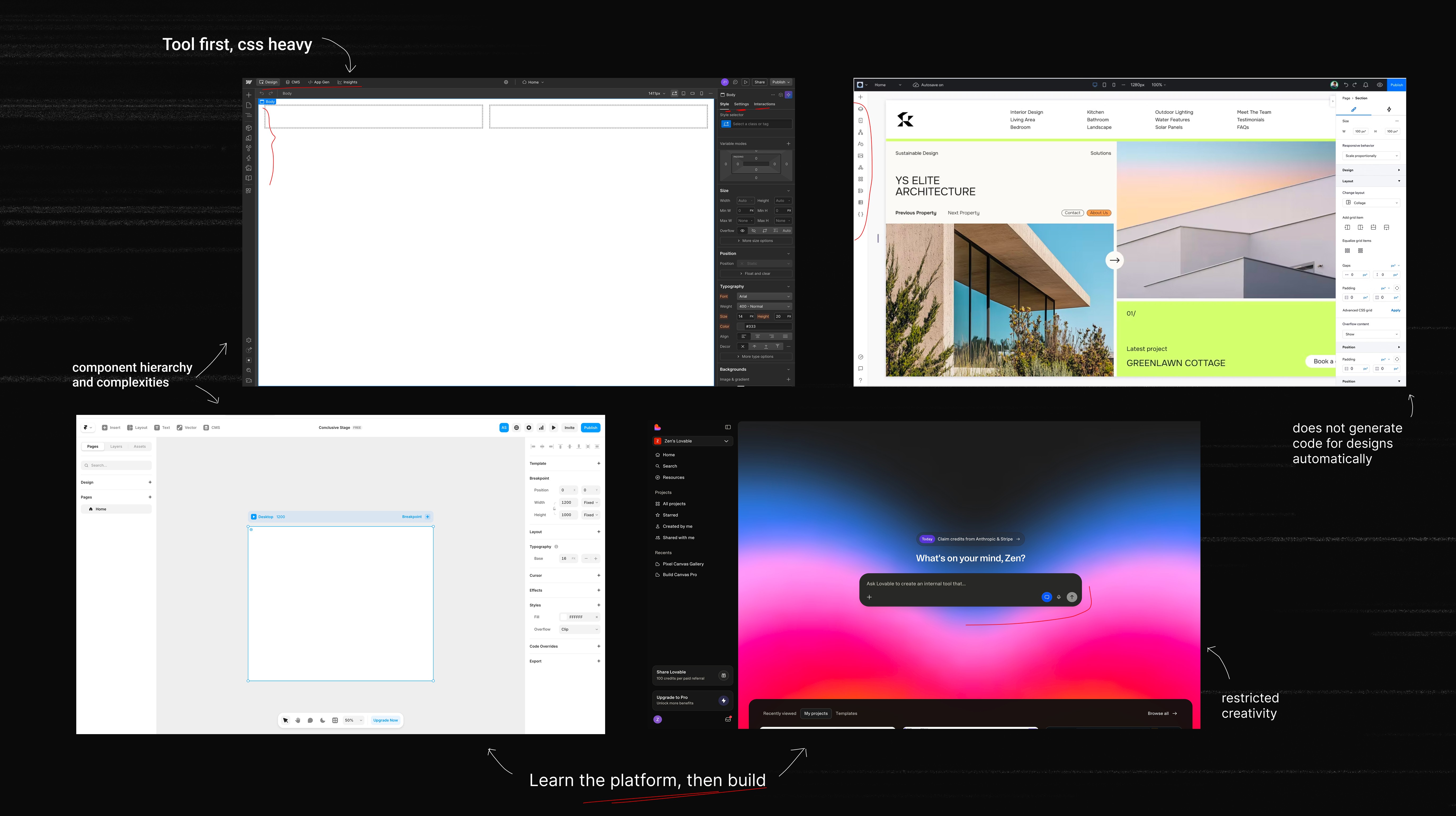
That idea shaped every design decision. A platform making that claim cannot look uncertain or experimental. It has to feel established from the start. Most platforms solve only one part of the problem. Some help you design. Others help you build, deploy, or scale. Each step happens in a different place, using a different tool.
Electroplix brings the entire process into one system.
Electroplix is not a response to existing tools. It represents what comes after them.
The brand book describes it clearly:
Technology becomes a direct extension of human intent.
That idea shaped every design decision. A platform making that claim cannot look uncertain or experimental. It has to feel established from the start. Most platforms solve only one part of the problem. Some help you design. Others help you build, deploy, or scale. Each step happens in a different place, using a different tool.
Electroplix brings the entire process into one system.
Electroplix is not a response to existing tools. It represents what comes after them.
The brand book describes it clearly:
Technology becomes a direct extension of human intent.
That idea shaped every design decision. A platform making that claim cannot look uncertain or experimental. It has to feel established from the start. Most platforms solve only one part of the problem. Some help you design. Others help you build, deploy, or scale. Each step happens in a different place, using a different tool.
Electroplix brings the entire process into one system.
Brand Direction
Brand Direction
Brand Direction
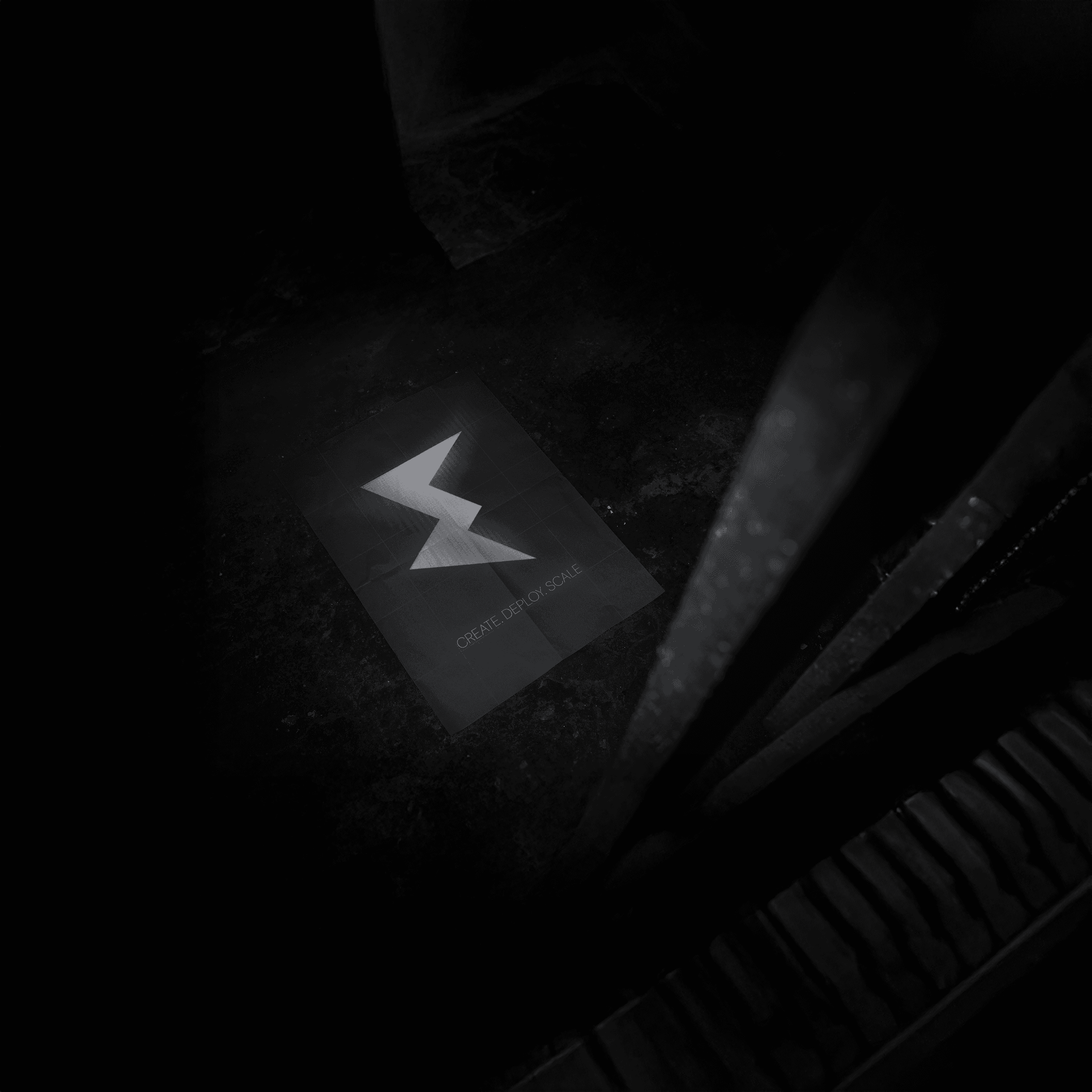
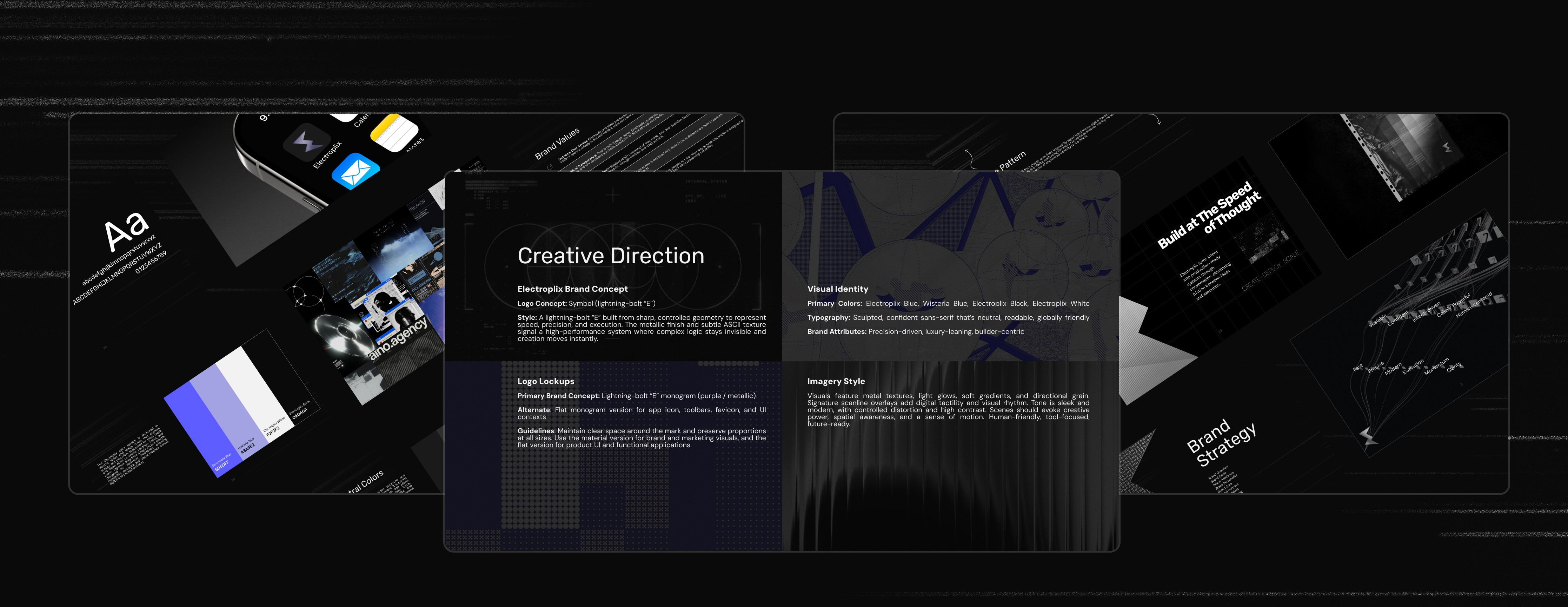
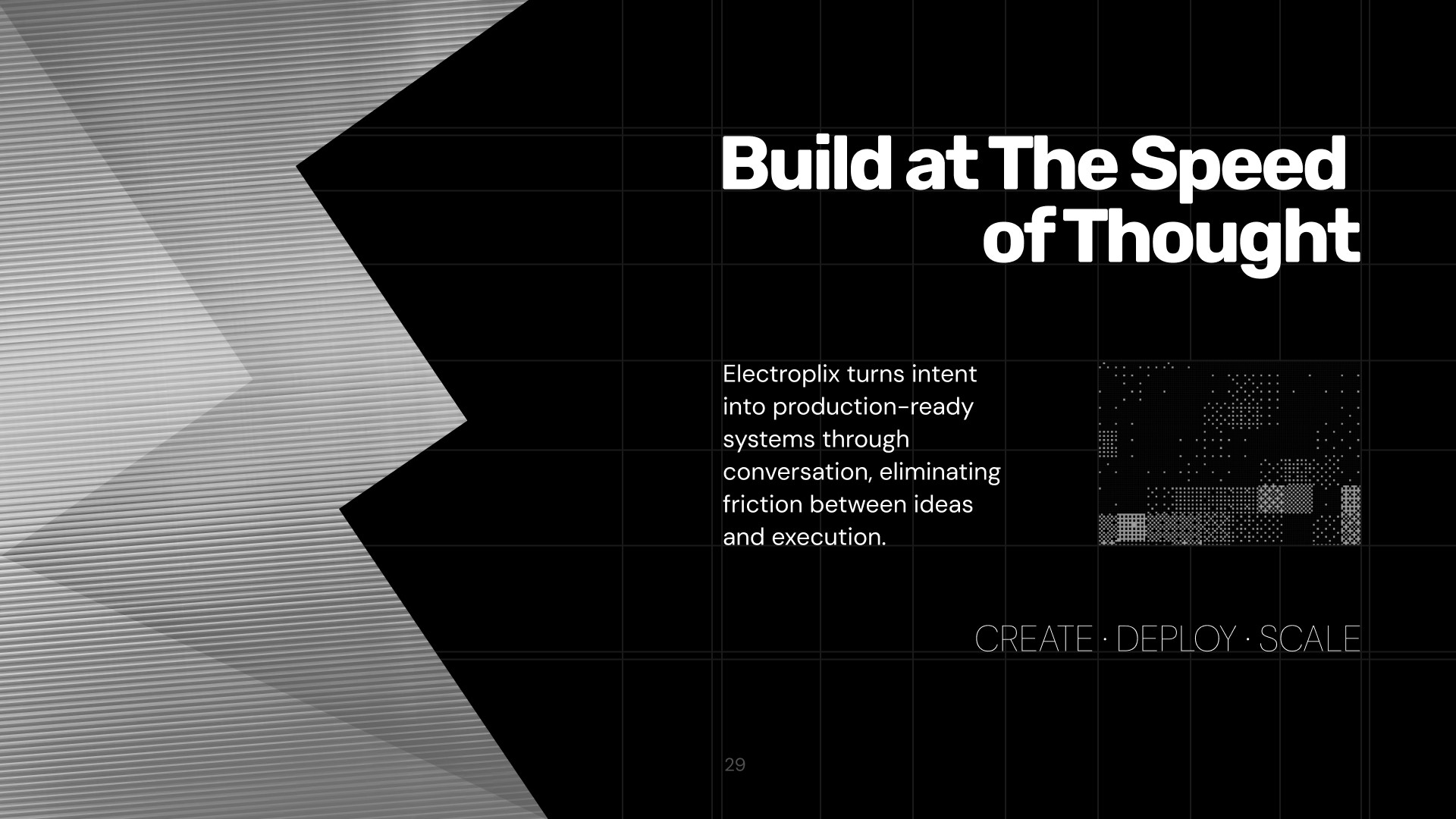
The brand speaks with quiet confidence. It does not rely on hype or big claims. The tone reflects a clear belief about where software creation is heading. The tagline, CREATE · DEPLOY · SCALE, is ordered intentionally. It reflects the mindset of builders who already expect their work to ship and grow.
The headline “Build at the speed of thought,” describes the experience rather than promising it.
Brand Purpose
The purpose of the brand is simple: make the ability to build complex digital systems available to anyone with a clear idea, not only to people with technical expertise.
The brand speaks with quiet confidence. It does not rely on hype or big claims. The tone reflects a clear belief about where software creation is heading. The tagline, CREATE · DEPLOY · SCALE, is ordered intentionally. It reflects the mindset of builders who already expect their work to ship and grow.
The headline “Build at the speed of thought,” describes the experience rather than promising it.
Brand Purpose
The purpose of the brand is simple: make the ability to build complex digital systems available to anyone with a clear idea, not only to people with technical expertise.
The brand speaks with quiet confidence. It does not rely on hype or big claims. The tone reflects a clear belief about where software creation is heading. The tagline, CREATE · DEPLOY · SCALE, is ordered intentionally. It reflects the mindset of builders who already expect their work to ship and grow.
The headline “Build at the speed of thought,” describes the experience rather than promising it.
Brand Purpose
The purpose of the brand is simple: make the ability to build complex digital systems available to anyone with a clear idea, not only to people with technical expertise.
Color System
The interface was designed dark-first from the start. The platform is built for developers, founders, and builders who spend most of their time working in dark environments, so a light interface would feel out of place.
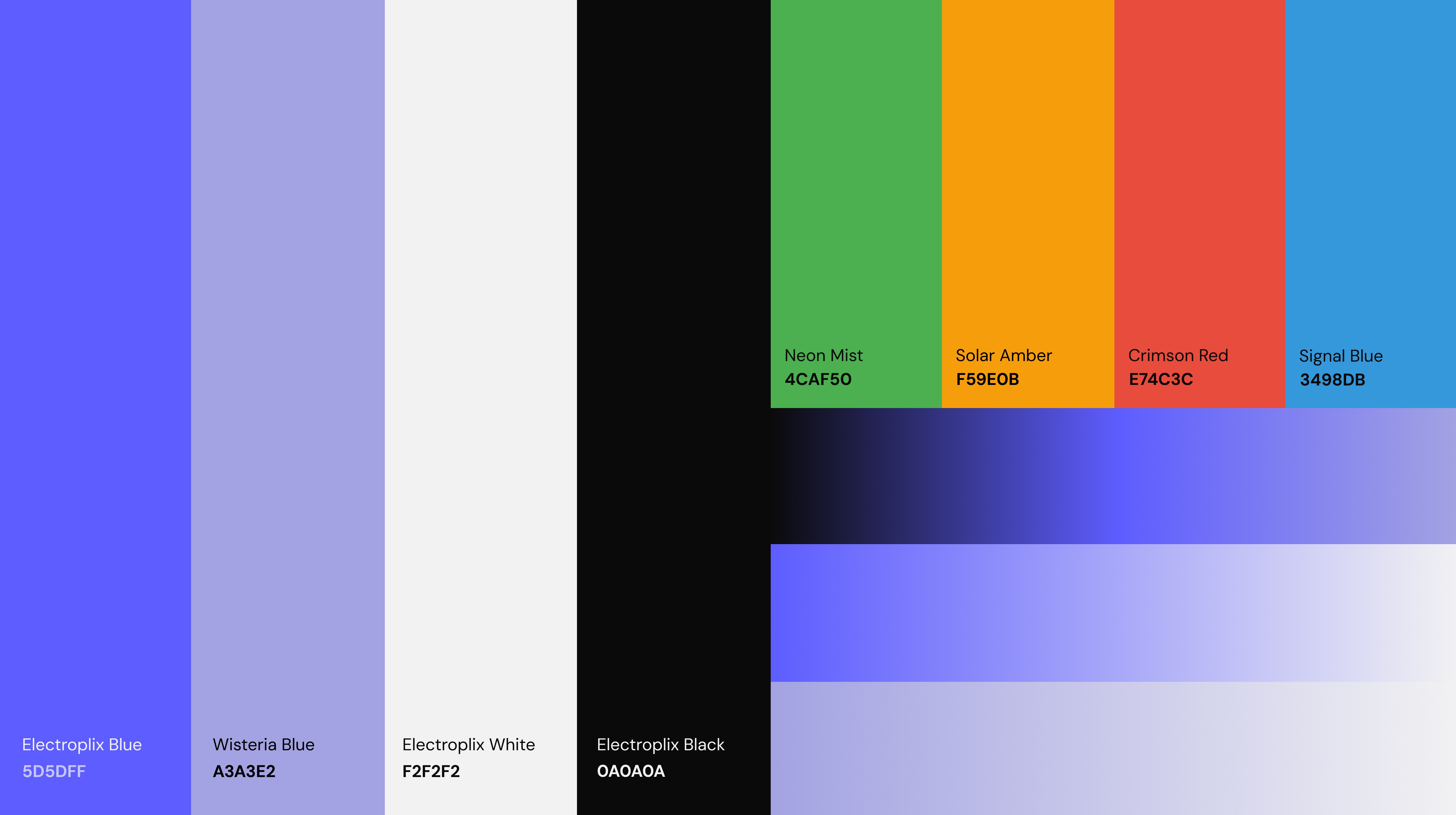
Electric violet (#5D5DFF) and Wisteria Blue (#A3A3E2) form the core of the palette. Black and white provide contrast and balance. The overall look feels engineered rather than decorative.
Color System
The interface was designed dark-first from the start. The platform is built for developers, founders, and builders who spend most of their time working in dark environments, so a light interface would feel out of place.
Electric violet (#5D5DFF) and Wisteria Blue (#A3A3E2) form the core of the palette. Black and white provide contrast and balance. The overall look feels engineered rather than decorative.
Color System
The interface was designed dark-first from the start. The platform is built for developers, founders, and builders who spend most of their time working in dark environments, so a light interface would feel out of place.
Electric violet (#5D5DFF) and Wisteria Blue (#A3A3E2) form the core of the palette. Black and white provide contrast and balance. The overall look feels engineered rather than decorative.
The Logo
The Logo
The Logo
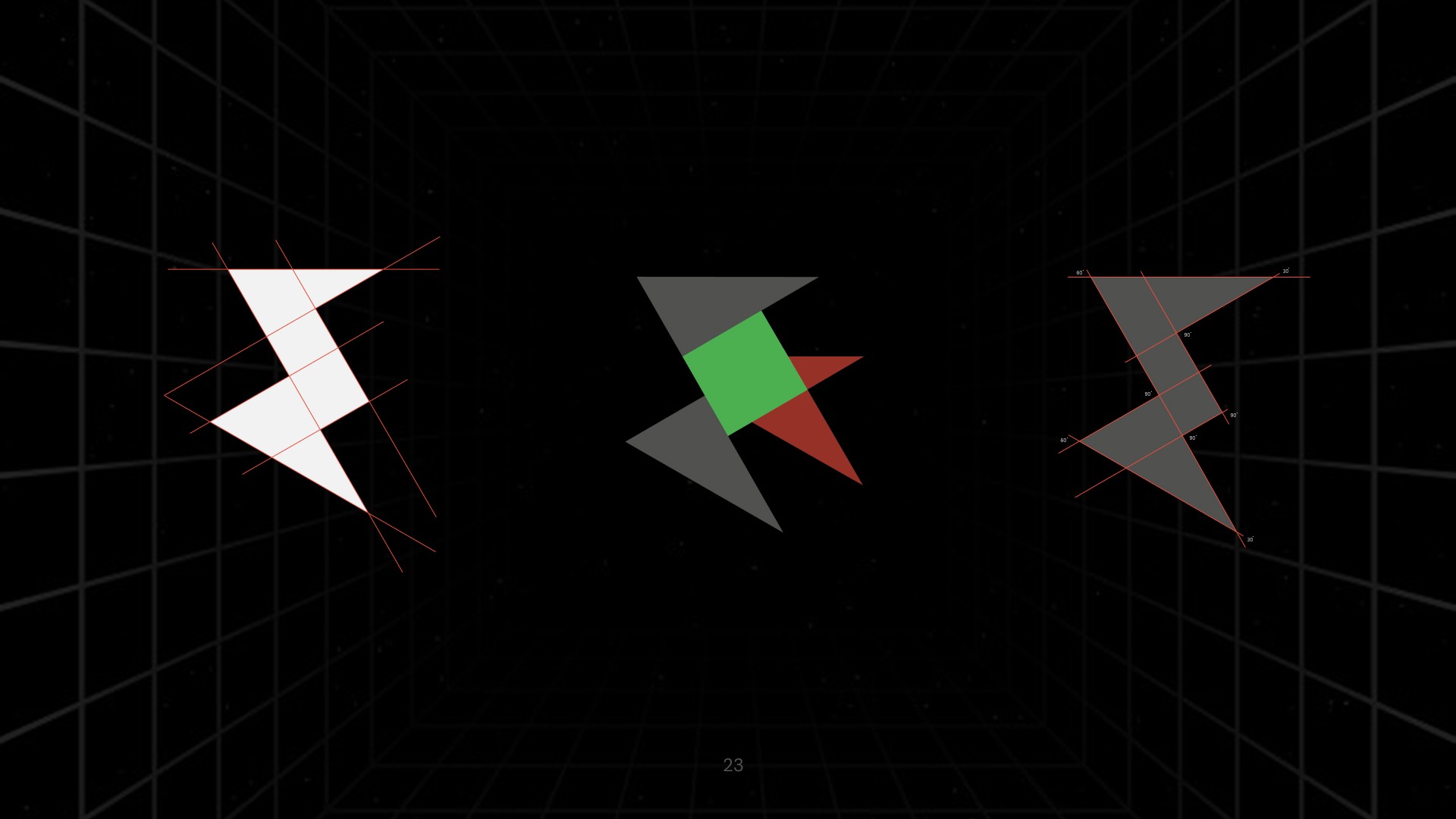
The mark is a lightning-shaped interpretation of the letter E. It uses sharp geometry built on a 30° and 60° grid, with the top and bottom sections slightly heavier than the center. The result suggests movement while staying controlled.
The mark is a lightning-shaped interpretation of the letter E. It uses sharp geometry built on a 30° and 60° grid, with the top and bottom sections slightly heavier than the center. The result suggests movement while staying controlled.
The mark is a lightning-shaped interpretation of the letter E. It uses sharp geometry built on a 30° and 60° grid, with the top and bottom sections slightly heavier than the center. The result suggests movement while staying controlled.
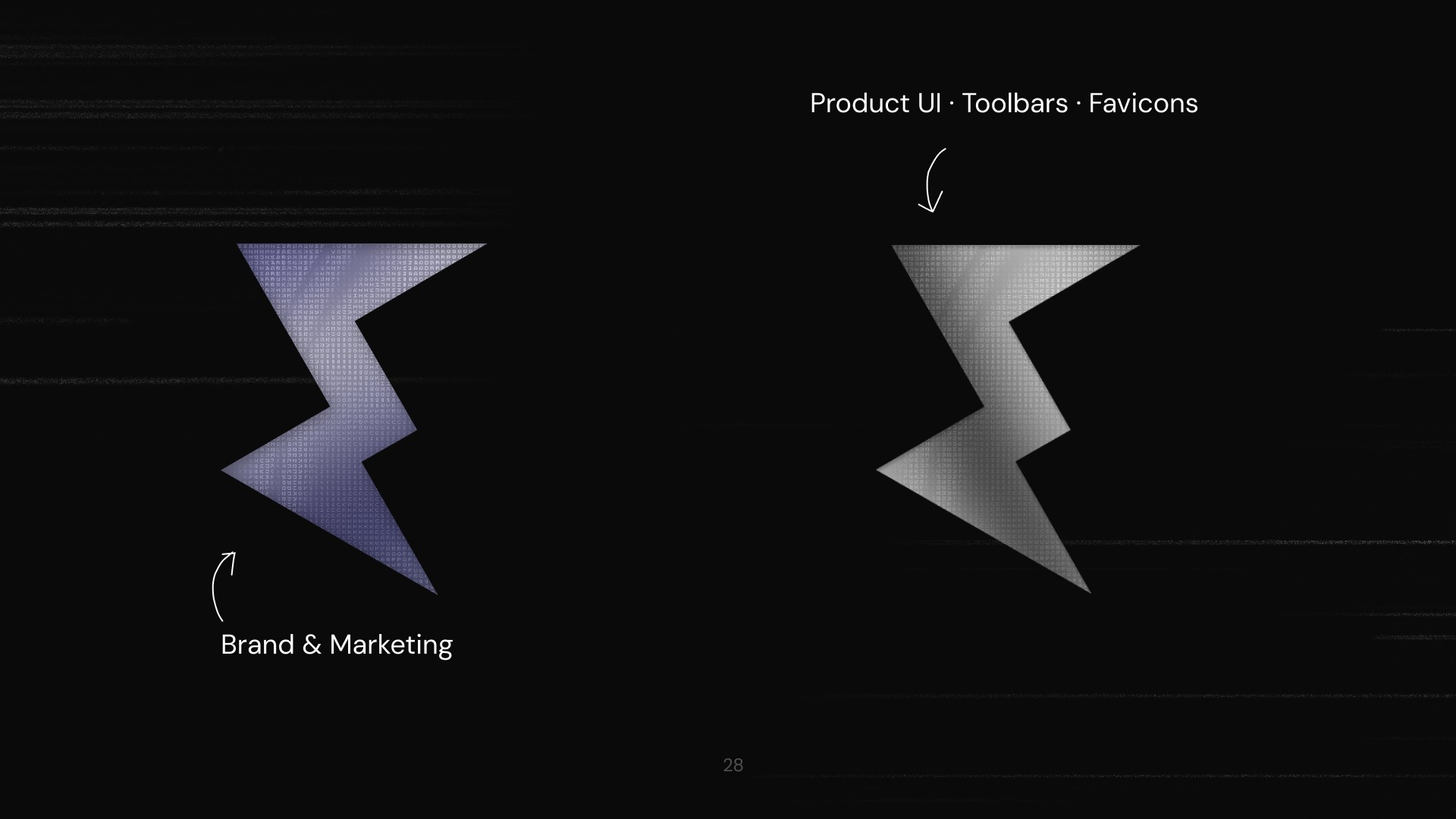
A subtle ASCII texture sits inside the mark at low opacity. It hints at the complex systems running behind the platform, processes the user never has to see. Two versions serve different contexts. The metallic version is used for brand and marketing. The flat version is used in the product interface, where clarity matters more than visual effect.
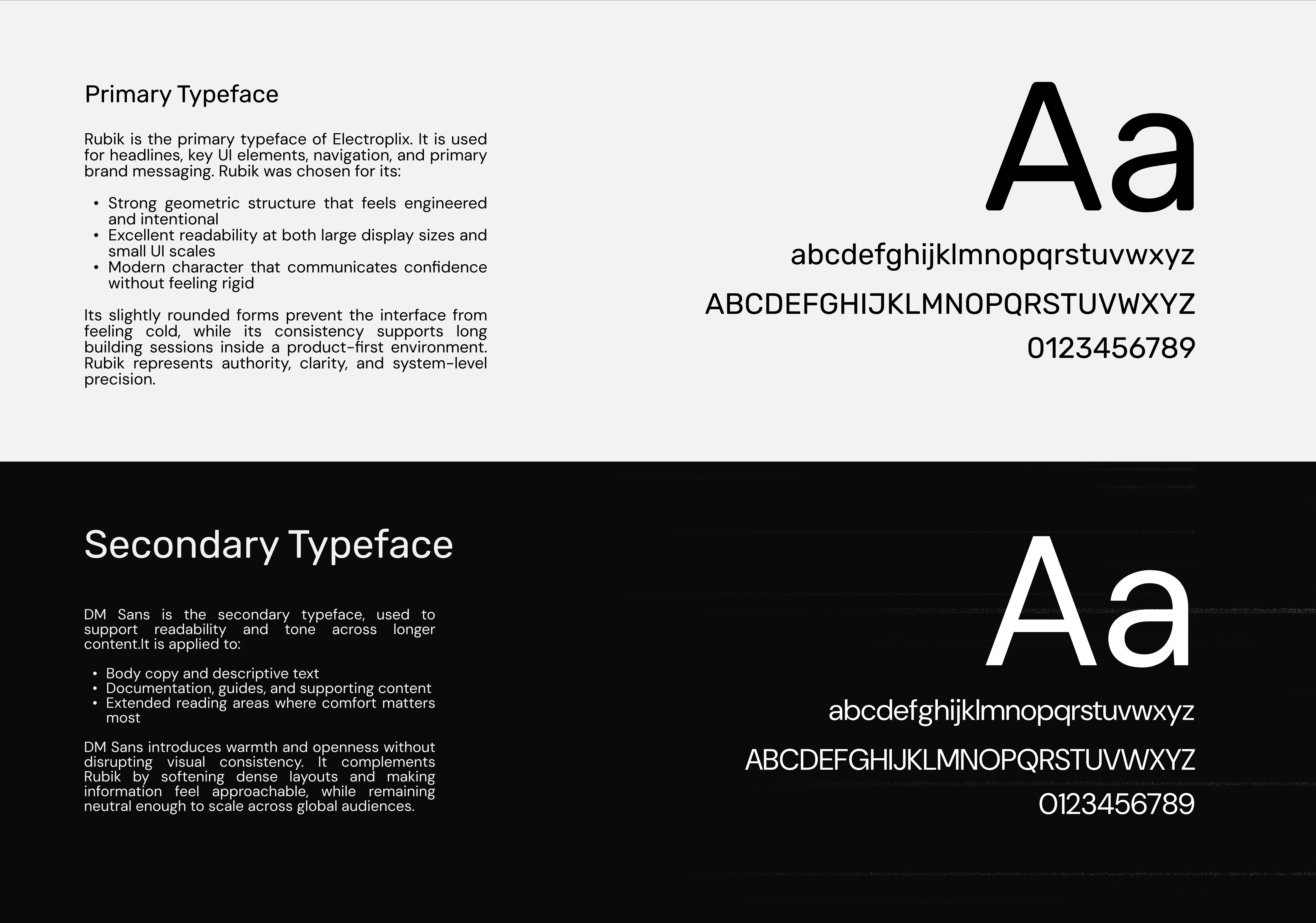
The type system pairs Rubik for headlines with DM Sans for body text. Rubik adds structure while its slightly rounded shapes keep the interface approachable during long sessions. DM Sans supports longer reading without distracting from the layout. Rubik leads. DM Sans supports.
A subtle ASCII texture sits inside the mark at low opacity. It hints at the complex systems running behind the platform, processes the user never has to see. Two versions serve different contexts. The metallic version is used for brand and marketing. The flat version is used in the product interface, where clarity matters more than visual effect.
The type system pairs Rubik for headlines with DM Sans for body text. Rubik adds structure while its slightly rounded shapes keep the interface approachable during long sessions. DM Sans supports longer reading without distracting from the layout. Rubik leads. DM Sans supports.
A subtle ASCII texture sits inside the mark at low opacity. It hints at the complex systems running behind the platform, processes the user never has to see. Two versions serve different contexts. The metallic version is used for brand and marketing. The flat version is used in the product interface, where clarity matters more than visual effect.
The type system pairs Rubik for headlines with DM Sans for body text. Rubik adds structure while its slightly rounded shapes keep the interface approachable during long sessions. DM Sans supports longer reading without distracting from the layout. Rubik leads. DM Sans supports.
The Design System
Before designing any screens, the full system was defined.
Every color token, spacing step, radius, type style, grid rule, and interaction state was set up and documented in Figma. The structure was finalized before wireframing began.
The Design System
Before designing any screens, the full system was defined.
Every color token, spacing step, radius, type style, grid rule, and interaction state was set up and documented in Figma. The structure was finalized before wireframing began.
The Design System
Before designing any screens, the full system was defined.
Every color token, spacing step, radius, type style, grid rule, and interaction state was set up and documented in Figma. The structure was finalized before wireframing began.
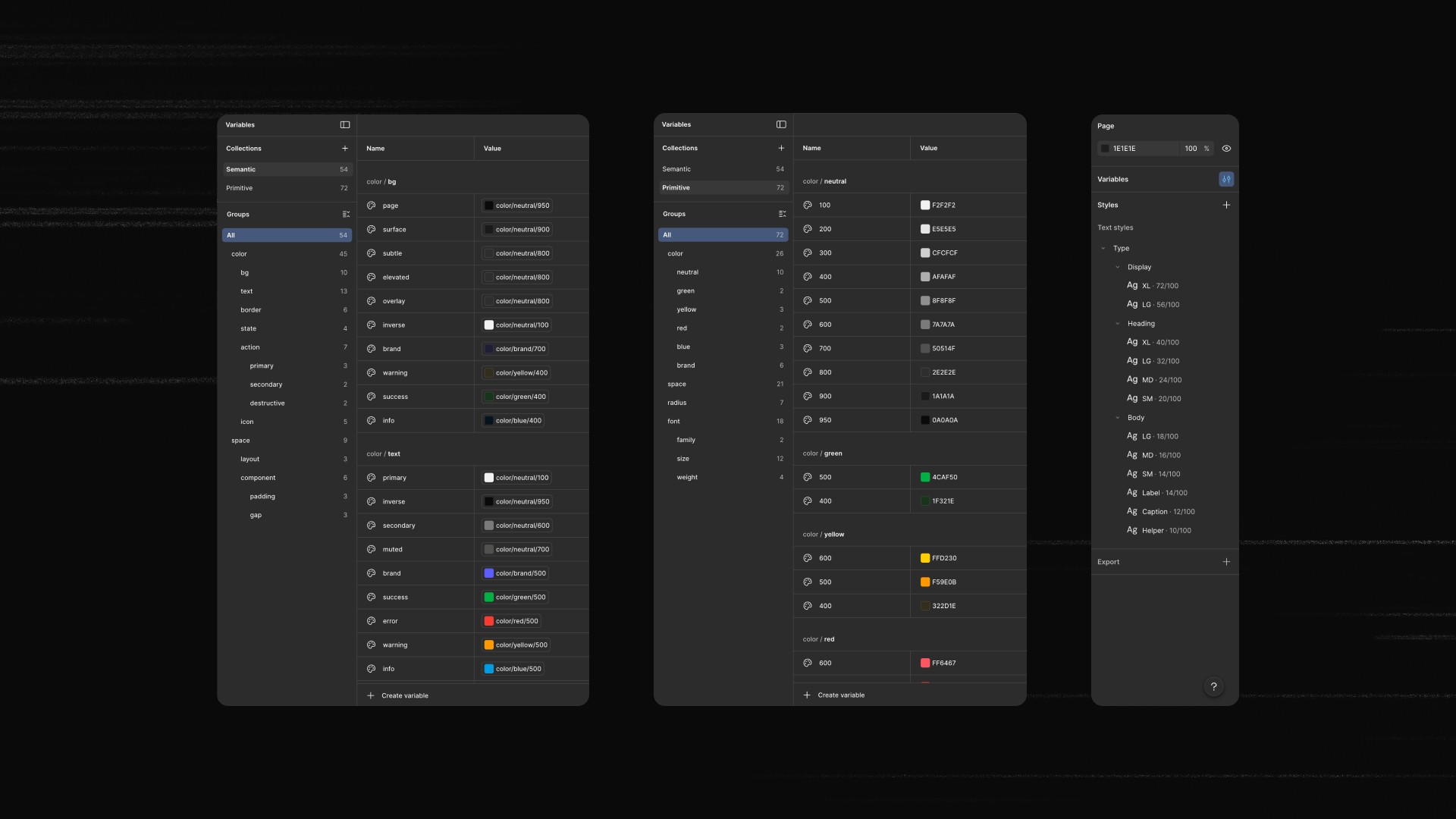
This was a structural choice, not just a preference in process. Electroplix is a complex product with many parts such as the canvas, sidebar, topbar, editor controls, branching logic, collaboration tools, and the AI interface. Without a system defined early, small decisions around color, spacing, and typography would keep repeating and create inconsistencies later.
The two-layer architecture:
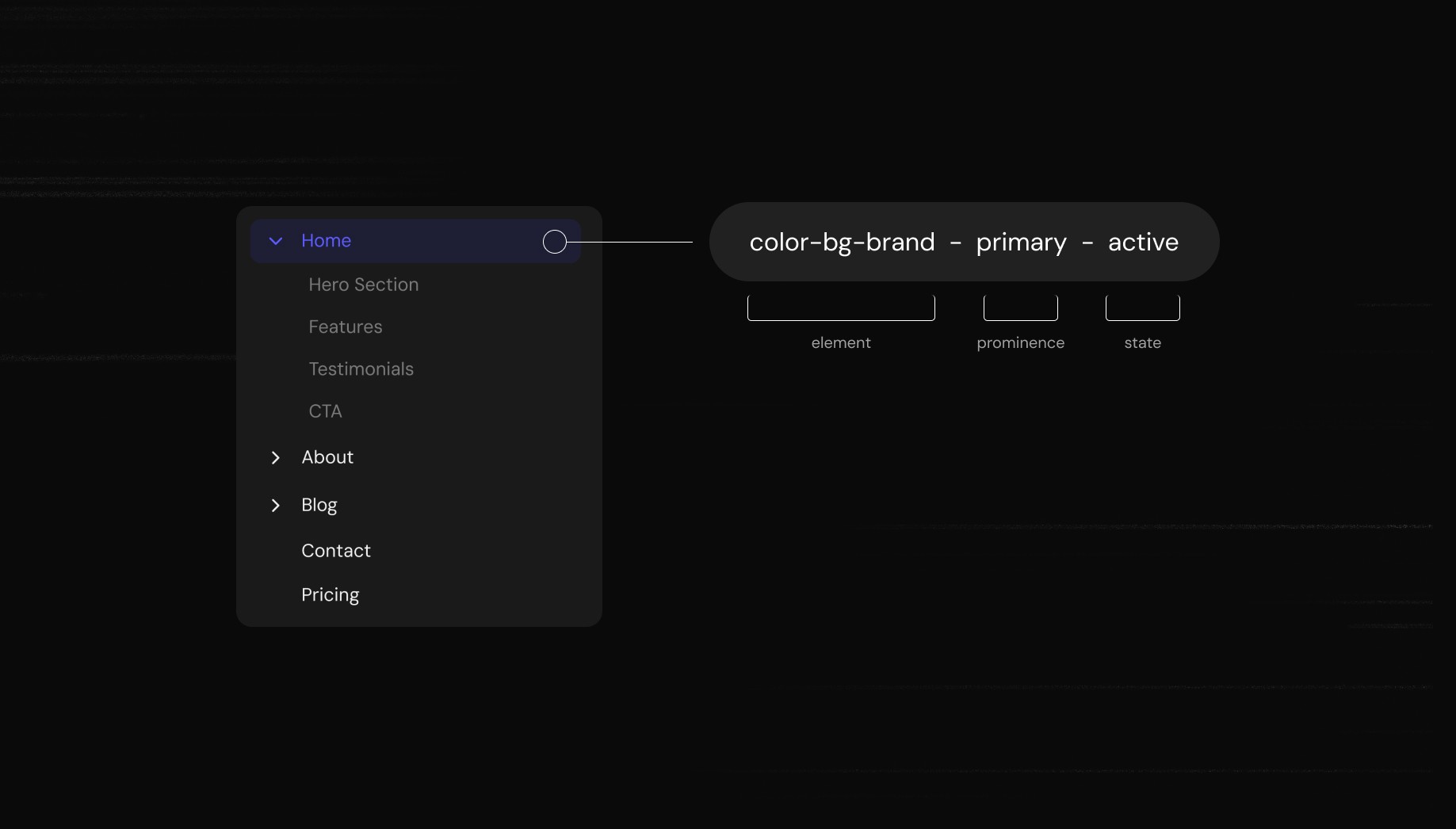
The primitive layer contains the raw values such as hex colors, pixel sizes, and base measurements. It acts as the source of truth. The semantic layer defines how those values are used in the interface. A token like color/bg/surface tells you its purpose without needing to trace it back to something like neutral/900. Developers only need to understand what the value is meant to do.
This was a structural choice, not just a preference in process. Electroplix is a complex product with many parts such as the canvas, sidebar, topbar, editor controls, branching logic, collaboration tools, and the AI interface. Without a system defined early, small decisions around color, spacing, and typography would keep repeating and create inconsistencies later.
The two-layer architecture:
The primitive layer contains the raw values such as hex colors, pixel sizes, and base measurements. It acts as the source of truth. The semantic layer defines how those values are used in the interface. A token like color/bg/surface tells you its purpose without needing to trace it back to something like neutral/900. Developers only need to understand what the value is meant to do.
This was a structural choice, not just a preference in process. Electroplix is a complex product with many parts such as the canvas, sidebar, topbar, editor controls, branching logic, collaboration tools, and the AI interface. Without a system defined early, small decisions around color, spacing, and typography would keep repeating and create inconsistencies later.
The two-layer architecture:
The primitive layer contains the raw values such as hex colors, pixel sizes, and base measurements. It acts as the source of truth. The semantic layer defines how those values are used in the interface. A token like color/bg/surface tells you its purpose without needing to trace it back to something like neutral/900. Developers only need to understand what the value is meant to do.
The First Screens
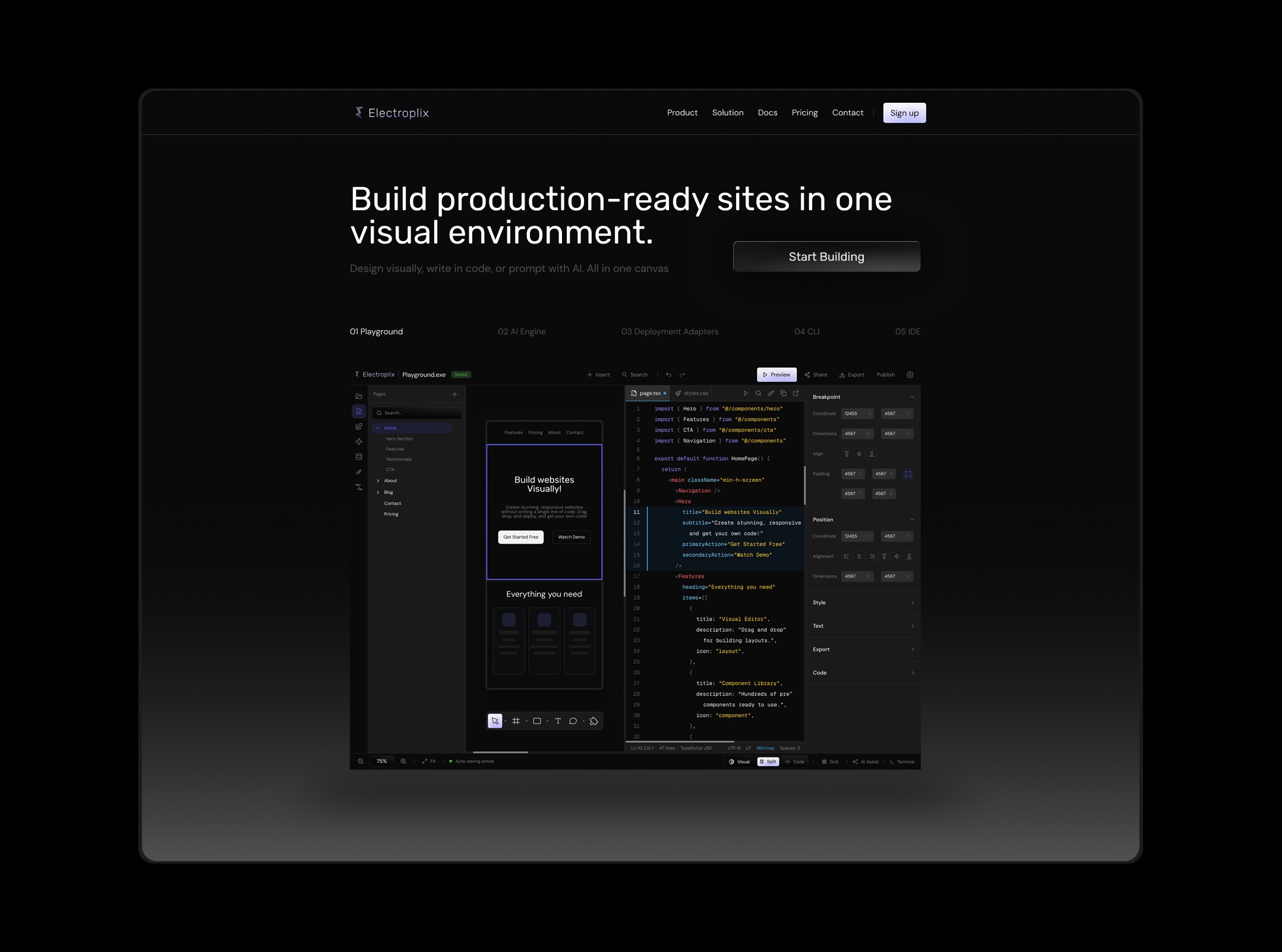
The goal was simple. Help someone who has never heard of Electroplix understand what it does in seconds and feel confident it works. The headline says it clearly: “Build production-ready sites in one visual environment.”
The design challenge here wasn't layout. It was making a platform with no live screenshots yet feel like it was already operating at scale. At this stage, that is entirely the brand's responsibility.
The First Screens
The goal was simple. Help someone who has never heard of Electroplix understand what it does in seconds and feel confident it works. The headline says it clearly: “Build production-ready sites in one visual environment.”
The design challenge here wasn't layout. It was making a platform with no live screenshots yet feel like it was already operating at scale. At this stage, that is entirely the brand's responsibility.
The First Screens
The goal was simple. Help someone who has never heard of Electroplix understand what it does in seconds and feel confident it works. The headline says it clearly: “Build production-ready sites in one visual environment.”
The design challenge here wasn't layout. It was making a platform with no live screenshots yet feel like it was already operating at scale. At this stage, that is entirely the brand's responsibility.
The Playground
The Playground
The Playground
The Playground is the product. Everything after it helps ship what was built.
The Playground is the product. Everything after it helps ship what was built.
The Playground is the product. Everything after it helps ship what was built.
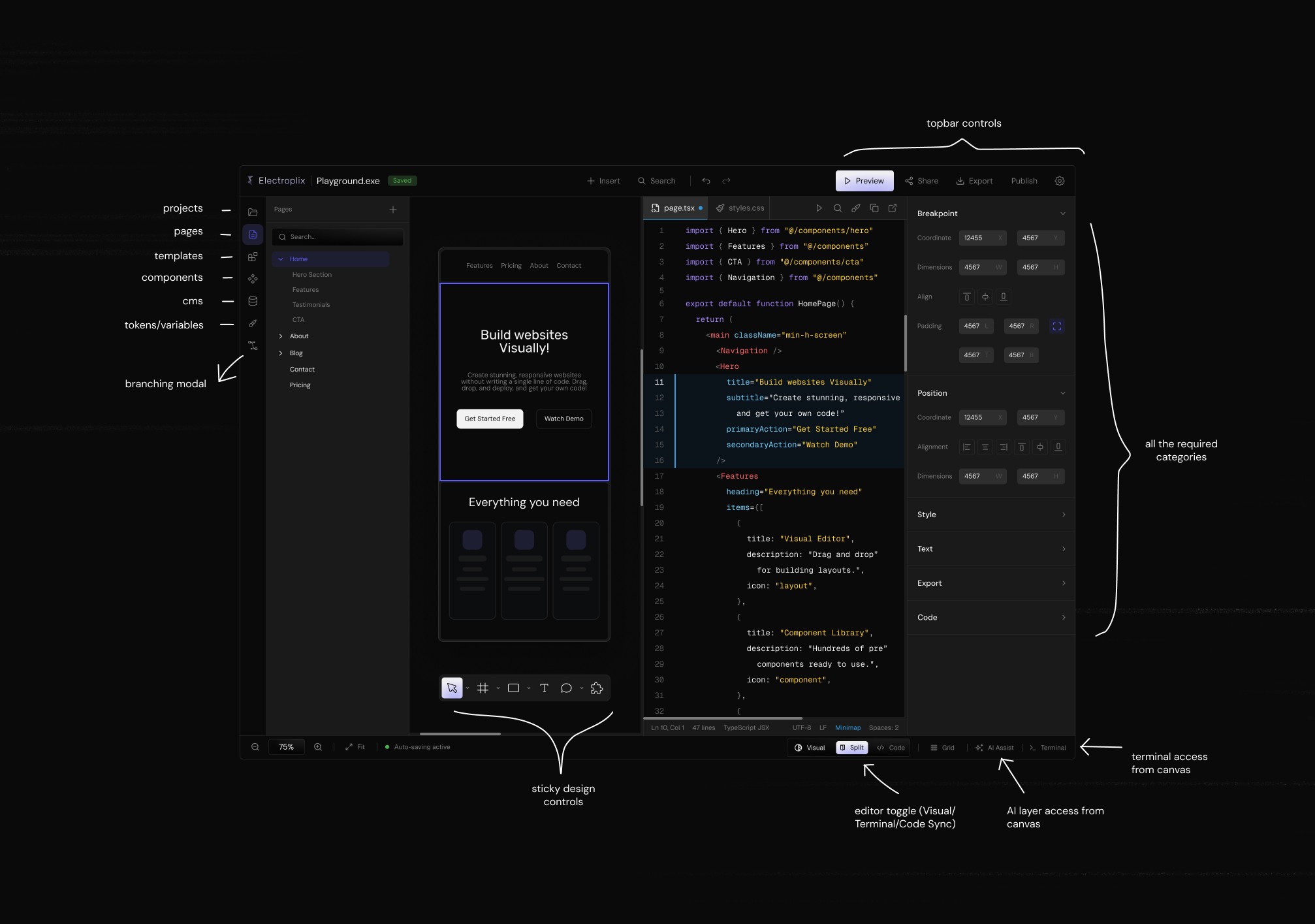
The layout follows a familiar structure. Tools on the left, canvas in the center, inspector on the right. But the goal was to show something deeper than a simple interface. The guiding idea was simple. Everything a serious builder needs should be within reach of the canvas. The moment someone has to leave it, the flow breaks.
Getting this screen right mattered more than anything else at this stage. If the Playground does not feel real and capable, the promise of building at the speed of thought falls apart.
The layout follows a familiar structure. Tools on the left, canvas in the center, inspector on the right. But the goal was to show something deeper than a simple interface. The guiding idea was simple. Everything a serious builder needs should be within reach of the canvas. The moment someone has to leave it, the flow breaks.
Getting this screen right mattered more than anything else at this stage. If the Playground does not feel real and capable, the promise of building at the speed of thought falls apart.
The layout follows a familiar structure. Tools on the left, canvas in the center, inspector on the right. But the goal was to show something deeper than a simple interface. The guiding idea was simple. Everything a serious builder needs should be within reach of the canvas. The moment someone has to leave it, the flow breaks.
Getting this screen right mattered more than anything else at this stage. If the Playground does not feel real and capable, the promise of building at the speed of thought falls apart.
What's Next
What's Next
What's Next
The brand is set. The system is in place. The first screens are live.
Next comes the rest of the product: the dashboard, auth flow, templates gallery, docs, pricing, and the full workspace. Each part will be judged using one question. Does it make the platform feel more convincing, or less?
“Build at the speed of thought” sets a high bar. It is intentional. The design can point towards that goal, but the product has to live up to it.
The brand is set. The system is in place. The first screens are live.
Next comes the rest of the product: the dashboard, auth flow, templates gallery, docs, pricing, and the full workspace. Each part will be judged using one question. Does it make the platform feel more convincing, or less?
“Build at the speed of thought” sets a high bar. It is intentional. The design can point towards that goal, but the product has to live up to it.
The brand is set. The system is in place. The first screens are live.
Next comes the rest of the product: the dashboard, auth flow, templates gallery, docs, pricing, and the full workspace. Each part will be judged using one question. Does it make the platform feel more convincing, or less?
“Build at the speed of thought” sets a high bar. It is intentional. The design can point towards that goal, but the product has to live up to it.
Other Projects:
Other Projects:

If you'd like to discuss a potential collaboration, reach out to me.
If you'd like to discuss a potential collaboration, reach out to me.
If you'd like to discuss a potential collaboration, reach out to me.