Building a defence forum that actually feels worth joining, DefenceGG
Building a defence forum that actually feels worth joining, DefenceGG
Building a defence forum that actually feels worth joining, DefenceGG
DefenceGG is a new online platform for serious discussion around global defence, strategy, and geopolitics. Built for veterans, analysts, researchers, and engaged civilians who want more than surface-level news. I was brought in to create the full brand identity and UI/UX, starting with the brand book and then moving into product design. The beta is currently live and in active user testing.
DefenceGG is a new online platform for serious discussion around global defence, strategy, and geopolitics. Built for veterans, analysts, researchers, and engaged civilians who want more than surface-level news. I was brought in to create the full brand identity and UI/UX, starting with the brand book and then moving into product design. The beta is currently live and in active user testing.
DefenceGG is a new online platform for serious discussion around global defence, strategy, and geopolitics. Built for veterans, analysts, researchers, and engaged civilians who want more than surface-level news. I was brought in to create the full brand identity and UI/UX, starting with the brand book and then moving into product design. The beta is currently live and in active user testing.
Services
Services
Services
Visual Direction, Branding, Website, Beta Testing
Visual Direction, Branding, Website, Beta Testing
Visual Direction, Branding, Website, Beta Testing
The Problem
The Problem
The Problem
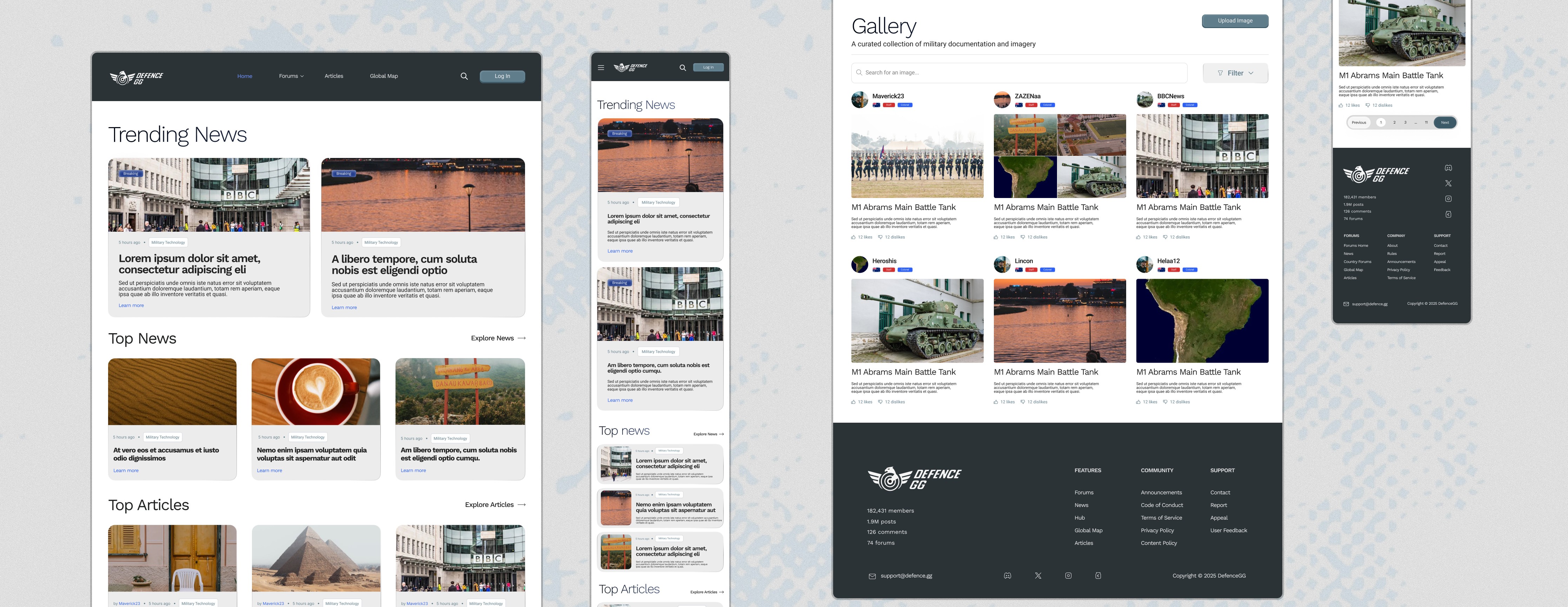
The defence forum space is not empty. DefenceForumBharat, Defence.in, StrategicFront, and DefencePK all have active communities. The issue is that they were built around the same time, with similar ideas about how forums should work, and very little has changed since then.
The competitor audit revealed a clear pattern. Most of these platforms rely on traditional forum layouts with long lists of text-heavy threads. Visual hierarchy is almost nonexistent, and there is little room for personalization. For new users, the interface can feel overwhelming, especially if they do not already understand how the forum works. Overall, these platforms prioritize the volume of content rather than the experience of reading or contributing to it.
The defence forum space is not empty. DefenceForumBharat, Defence.in, StrategicFront, and DefencePK all have active communities. The issue is that they were built around the same time, with similar ideas about how forums should work, and very little has changed since then.
The competitor audit revealed a clear pattern. Most of these platforms rely on traditional forum layouts with long lists of text-heavy threads. Visual hierarchy is almost nonexistent, and there is little room for personalization. For new users, the interface can feel overwhelming, especially if they do not already understand how the forum works. Overall, these platforms prioritize the volume of content rather than the experience of reading or contributing to it.
The defence forum space is not empty. DefenceForumBharat, Defence.in, StrategicFront, and DefencePK all have active communities. The issue is that they were built around the same time, with similar ideas about how forums should work, and very little has changed since then.
The competitor audit revealed a clear pattern. Most of these platforms rely on traditional forum layouts with long lists of text-heavy threads. Visual hierarchy is almost nonexistent, and there is little room for personalization. For new users, the interface can feel overwhelming, especially if they do not already understand how the forum works. Overall, these platforms prioritize the volume of content rather than the experience of reading or contributing to it.
The Visual Direction & Logo
The Visual Direction & Logo
The Visual Direction & Logo
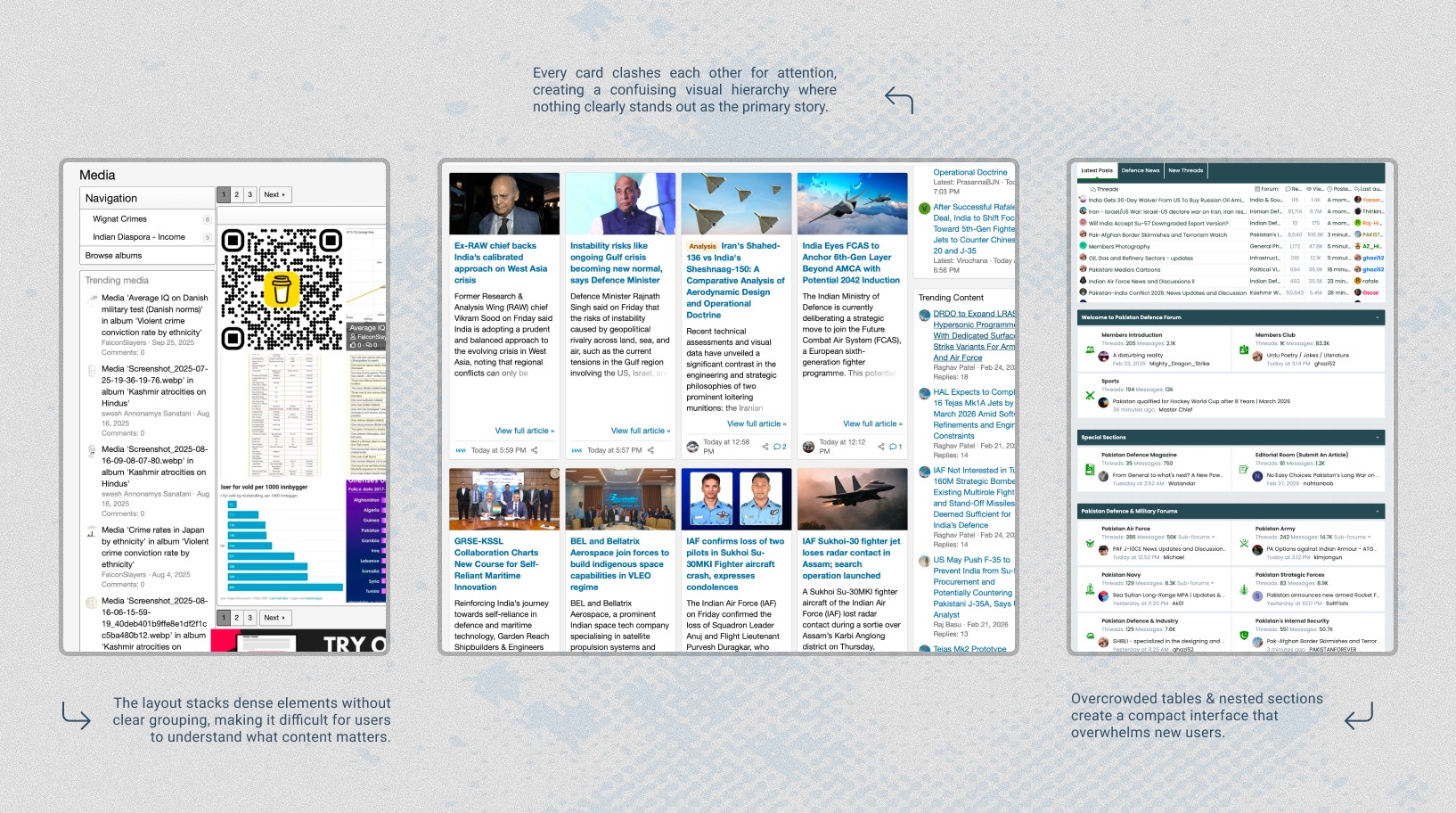
Most defence forums already share the same visual style. Dark greens, khaki tones, and heavy military symbols dominate the space. This also brings a tone that feels harsh and outdated. DefenceGG had a different goal. The platform was built for thoughtful analysis and civil discussion, so the identity needed to reflect that difference.
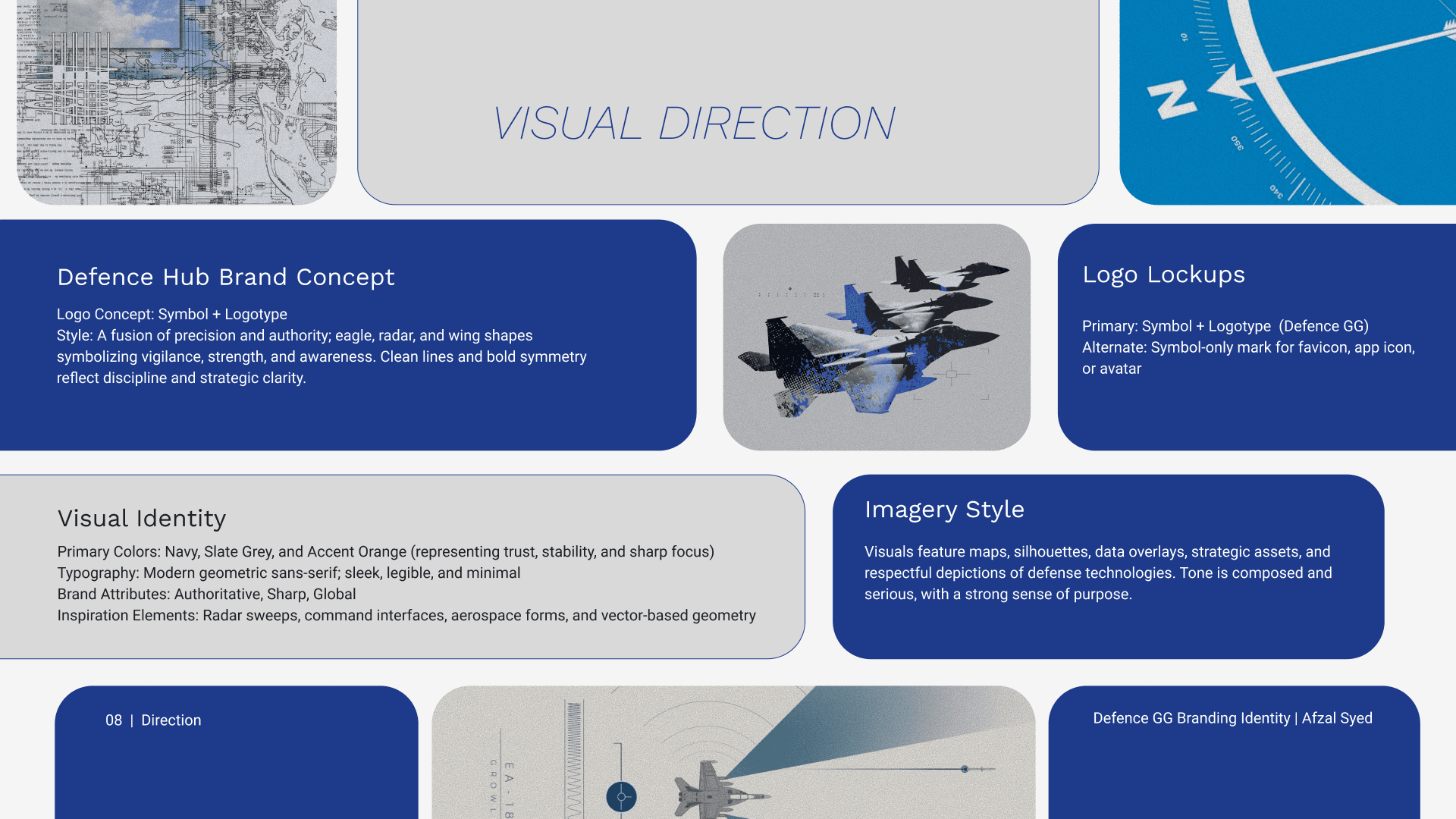
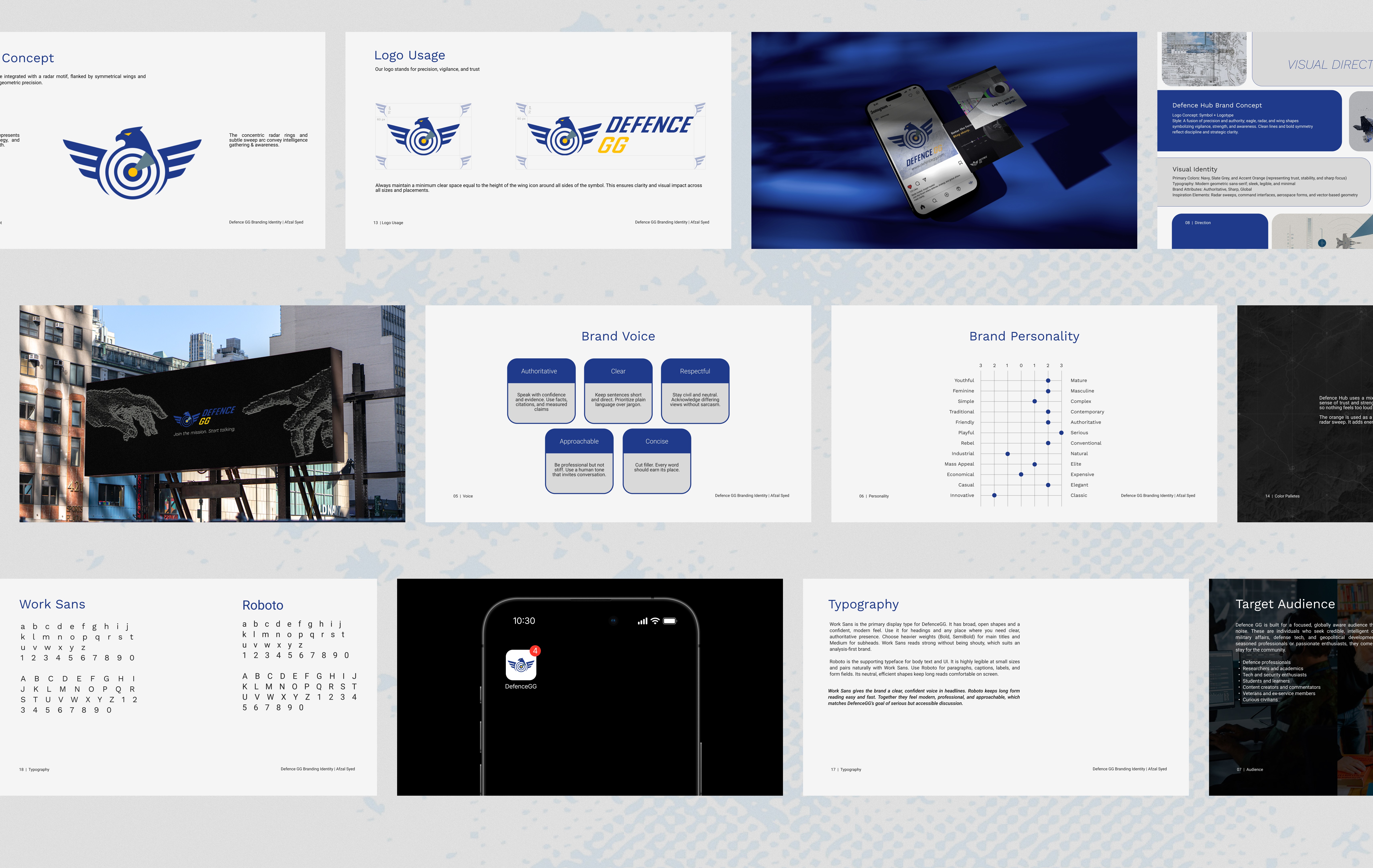
The color system is centered around French Blue and Slate Grey. Together, they create a sense of trust and stability without leaning into the typical military look. Alongside the core palette, a simple semantic color system supports forum interactions. Green marks validated answers, amber highlights flags or cautions, and red signals warnings.
Most defence forums already share the same visual style. Dark greens, khaki tones, and heavy military symbols dominate the space. This also brings a tone that feels harsh and outdated. DefenceGG had a different goal. The platform was built for thoughtful analysis and civil discussion, so the identity needed to reflect that difference.
The color system is centered around French Blue and Slate Grey. Together, they create a sense of trust and stability without leaning into the typical military look. Alongside the core palette, a simple semantic color system supports forum interactions. Green marks validated answers, amber highlights flags or cautions, and red signals warnings.
Most defence forums already share the same visual style. Dark greens, khaki tones, and heavy military symbols dominate the space. This also brings a tone that feels harsh and outdated. DefenceGG had a different goal. The platform was built for thoughtful analysis and civil discussion, so the identity needed to reflect that difference.
The color system is centered around French Blue and Slate Grey. Together, they create a sense of trust and stability without leaning into the typical military look. Alongside the core palette, a simple semantic color system supports forum interactions. Green marks validated answers, amber highlights flags or cautions, and red signals warnings.
The Logo
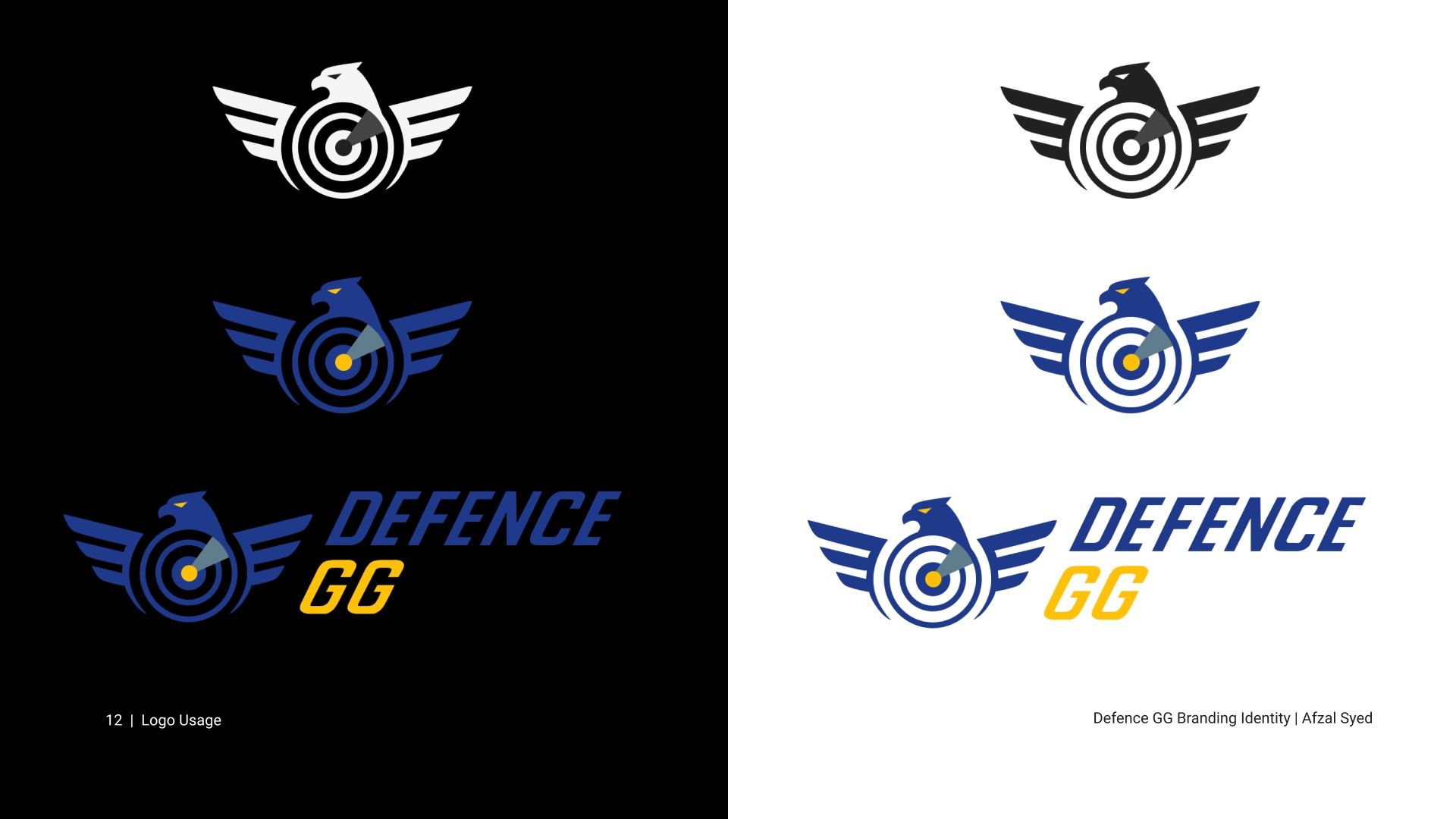
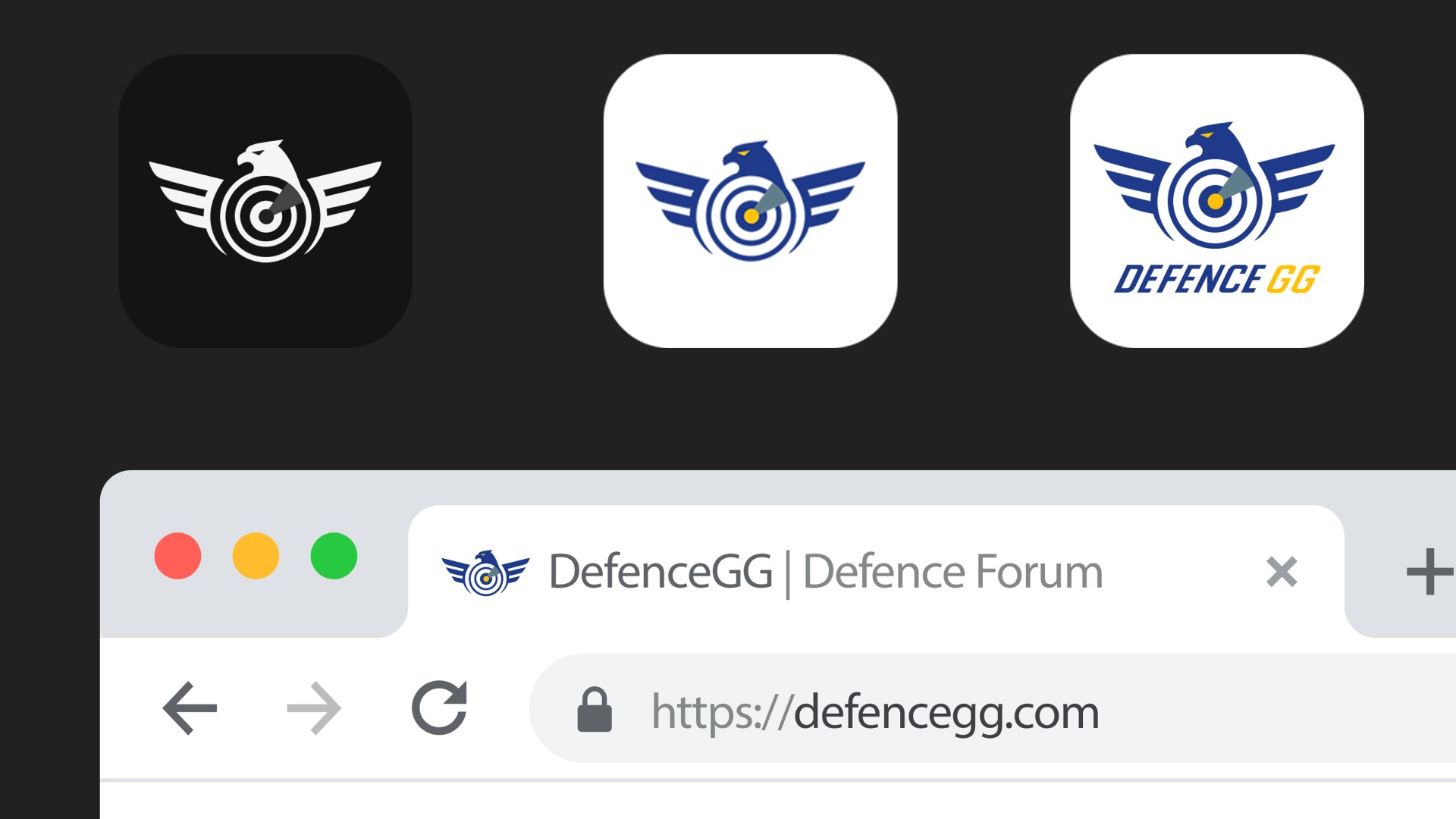
The mark combines an eagle with a radar form. The eagle represents vigilance. The radar signals analysis and awareness. Together, they reflect what the platform stands for. Not a military badge, but a symbol for tracking important developments and thinking about them clearly.
The wordmark reinforces that idea. DEFENCE appears in bold navy to signal authority and stability. GG sits in Amber Gold italics to add contrast and memorability without feeling loud. The icon was also designed to stay clear at small sizes, since the platform is most often seen in browser tabs and phone home screens.
The Logo
The mark combines an eagle with a radar form. The eagle represents vigilance. The radar signals analysis and awareness. Together, they reflect what the platform stands for. Not a military badge, but a symbol for tracking important developments and thinking about them clearly.
The wordmark reinforces that idea. DEFENCE appears in bold navy to signal authority and stability. GG sits in Amber Gold italics to add contrast and memorability without feeling loud. The icon was also designed to stay clear at small sizes, since the platform is most often seen in browser tabs and phone home screens.
The Logo
The mark combines an eagle with a radar form. The eagle represents vigilance. The radar signals analysis and awareness. Together, they reflect what the platform stands for. Not a military badge, but a symbol for tracking important developments and thinking about them clearly.
The wordmark reinforces that idea. DEFENCE appears in bold navy to signal authority and stability. GG sits in Amber Gold italics to add contrast and memorability without feeling loud. The icon was also designed to stay clear at small sizes, since the platform is most often seen in browser tabs and phone home screens.
Research
Research
Research
Before moving into wireframes, I looked closely at where existing platforms were failing and what this product needed to do differently.
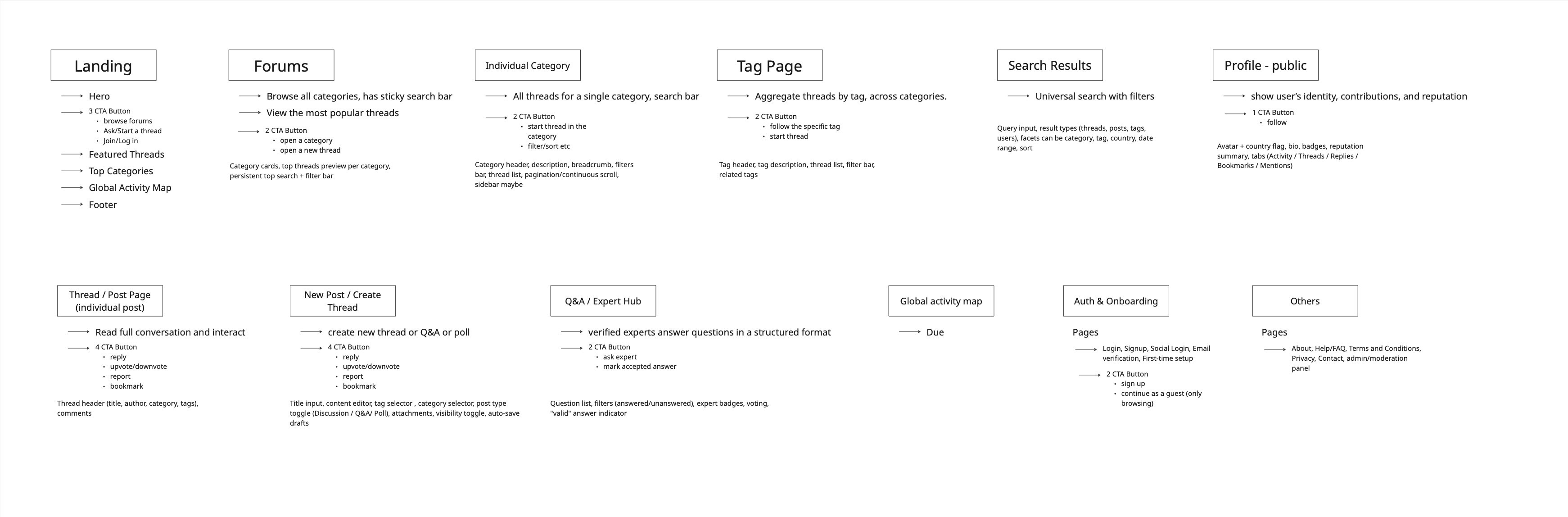
The competitor audit revealed one issue. None of these platforms treat the guest experience as an intentional product decision. You land on the site, see a long list of categories, and are quickly pushed to register. For researchers and analysts who want to judge the quality of discussion first, this approach works against them. If people cannot see the value before signing up, they are unlikely to sign up at all.
Two key flows came out of this insight and shaped the product.
Before moving into wireframes, I looked closely at where existing platforms were failing and what this product needed to do differently.
The competitor audit revealed one issue. None of these platforms treat the guest experience as an intentional product decision. You land on the site, see a long list of categories, and are quickly pushed to register. For researchers and analysts who want to judge the quality of discussion first, this approach works against them. If people cannot see the value before signing up, they are unlikely to sign up at all.
Two key flows came out of this insight and shaped the product.
Before moving into wireframes, I looked closely at where existing platforms were failing and what this product needed to do differently.
The competitor audit revealed one issue. None of these platforms treat the guest experience as an intentional product decision. You land on the site, see a long list of categories, and are quickly pushed to register. For researchers and analysts who want to judge the quality of discussion first, this approach works against them. If people cannot see the value before signing up, they are unlikely to sign up at all.
Two key flows came out of this insight and shaped the product.
Flow 1: Guest browsing
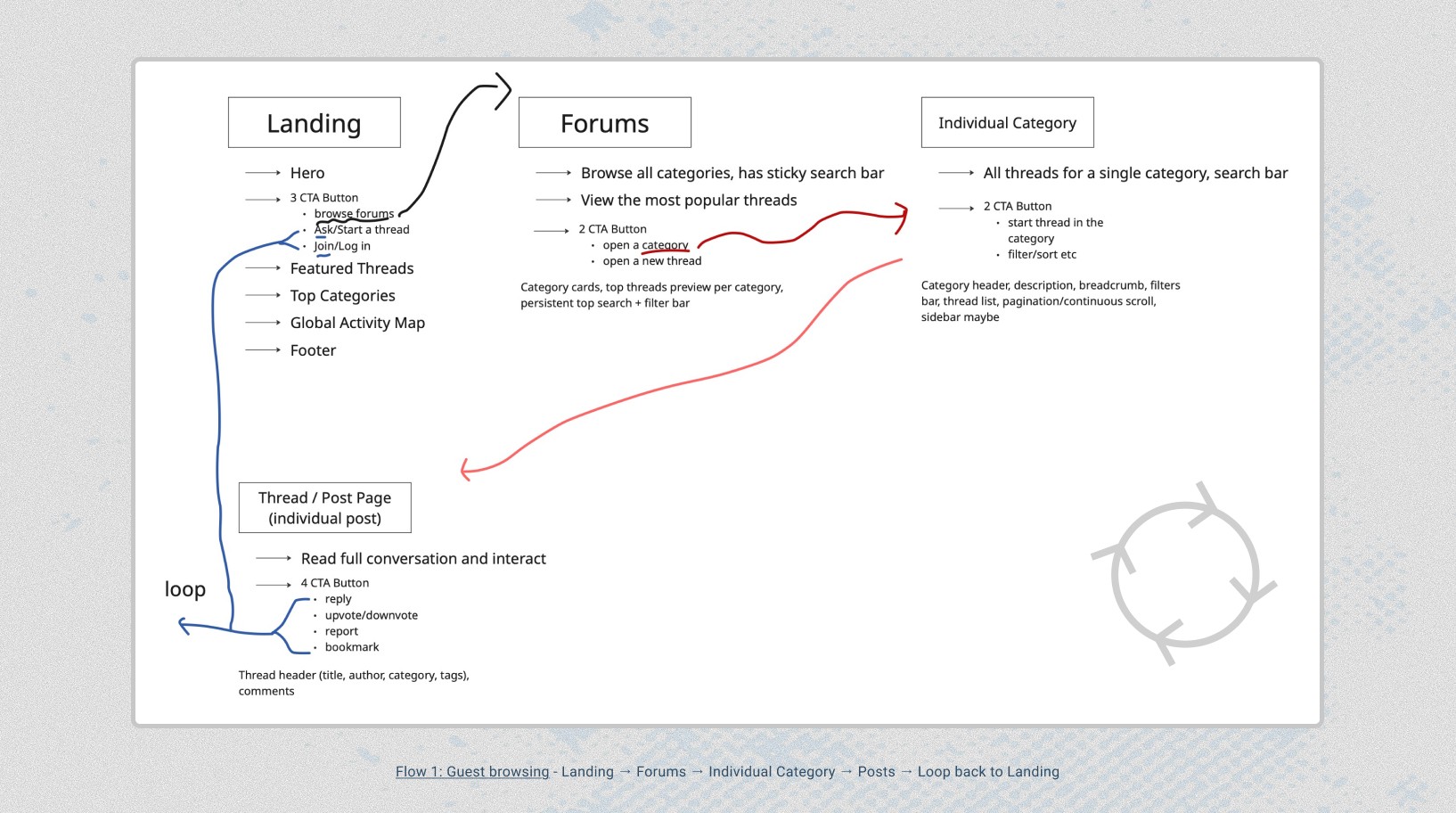
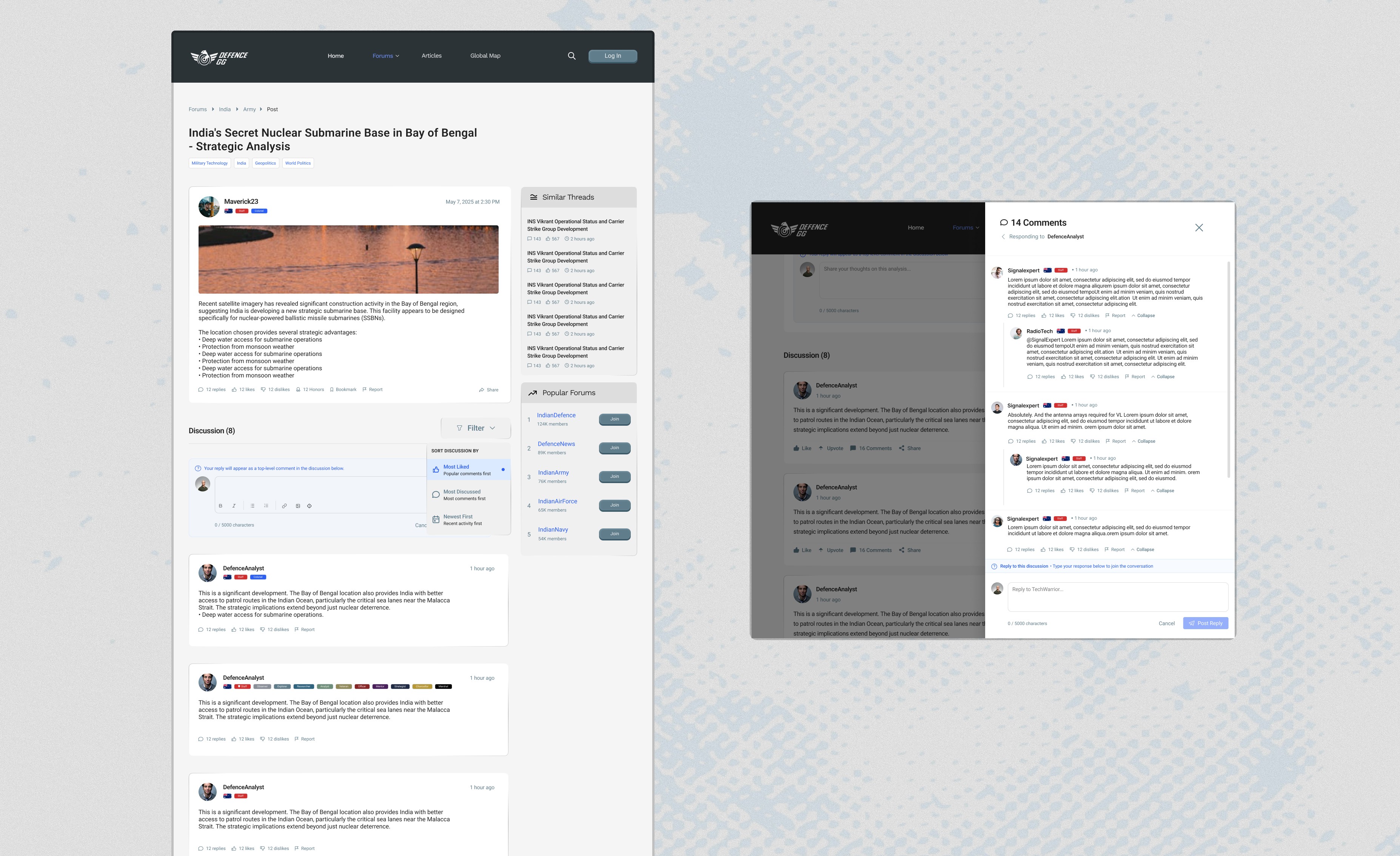
Guests can move from the landing page to the forums, into a category, and then into individual threads. They can read the full discussion and interact with it through replies, votes, reports, or bookmarks. From there, they can continue exploring other categories or return to the landing page. At no point are they forced to register. The experience is designed to work on its own, allowing guests to stay in a reading loop for as long as they want.
Flow 1: Guest browsing
Guests can move from the landing page to the forums, into a category, and then into individual threads. They can read the full discussion and interact with it through replies, votes, reports, or bookmarks. From there, they can continue exploring other categories or return to the landing page. At no point are they forced to register. The experience is designed to work on its own, allowing guests to stay in a reading loop for as long as they want.
Flow 1: Guest browsing
Guests can move from the landing page to the forums, into a category, and then into individual threads. They can read the full discussion and interact with it through replies, votes, reports, or bookmarks. From there, they can continue exploring other categories or return to the landing page. At no point are they forced to register. The experience is designed to work on its own, allowing guests to stay in a reading loop for as long as they want.
Flow 2: New member path
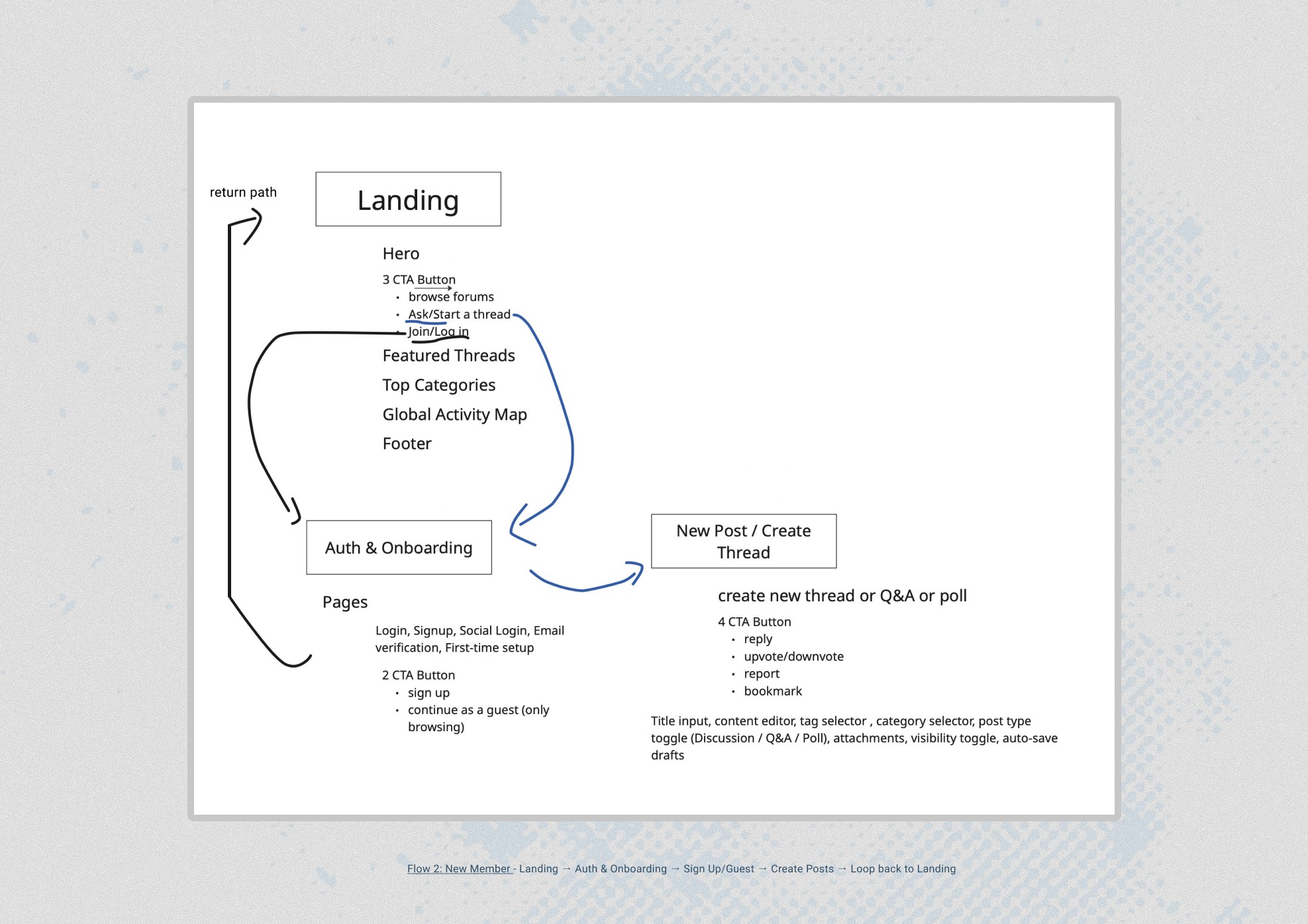
For users who choose to join, the landing page leads into authentication and onboarding. Here, the interface presents two clear options. Sign up, or continue as a guest. The choice is visible and explicit. After signing in, users can create posts, start discussions, ask questions, or run polls. Guests who decide later to join can return to the authentication flow at any time.
Flow 2: New member path
For users who choose to join, the landing page leads into authentication and onboarding. Here, the interface presents two clear options. Sign up, or continue as a guest. The choice is visible and explicit. After signing in, users can create posts, start discussions, ask questions, or run polls. Guests who decide later to join can return to the authentication flow at any time.
Flow 2: New member path
For users who choose to join, the landing page leads into authentication and onboarding. Here, the interface presents two clear options. Sign up, or continue as a guest. The choice is visible and explicit. After signing in, users can create posts, start discussions, ask questions, or run polls. Guests who decide later to join can return to the authentication flow at any time.
Design Decisions
The guest experience came first
The guest loop had to work before anything else. The flows were defined before a single screen was designed, and that order shaped the entire product.
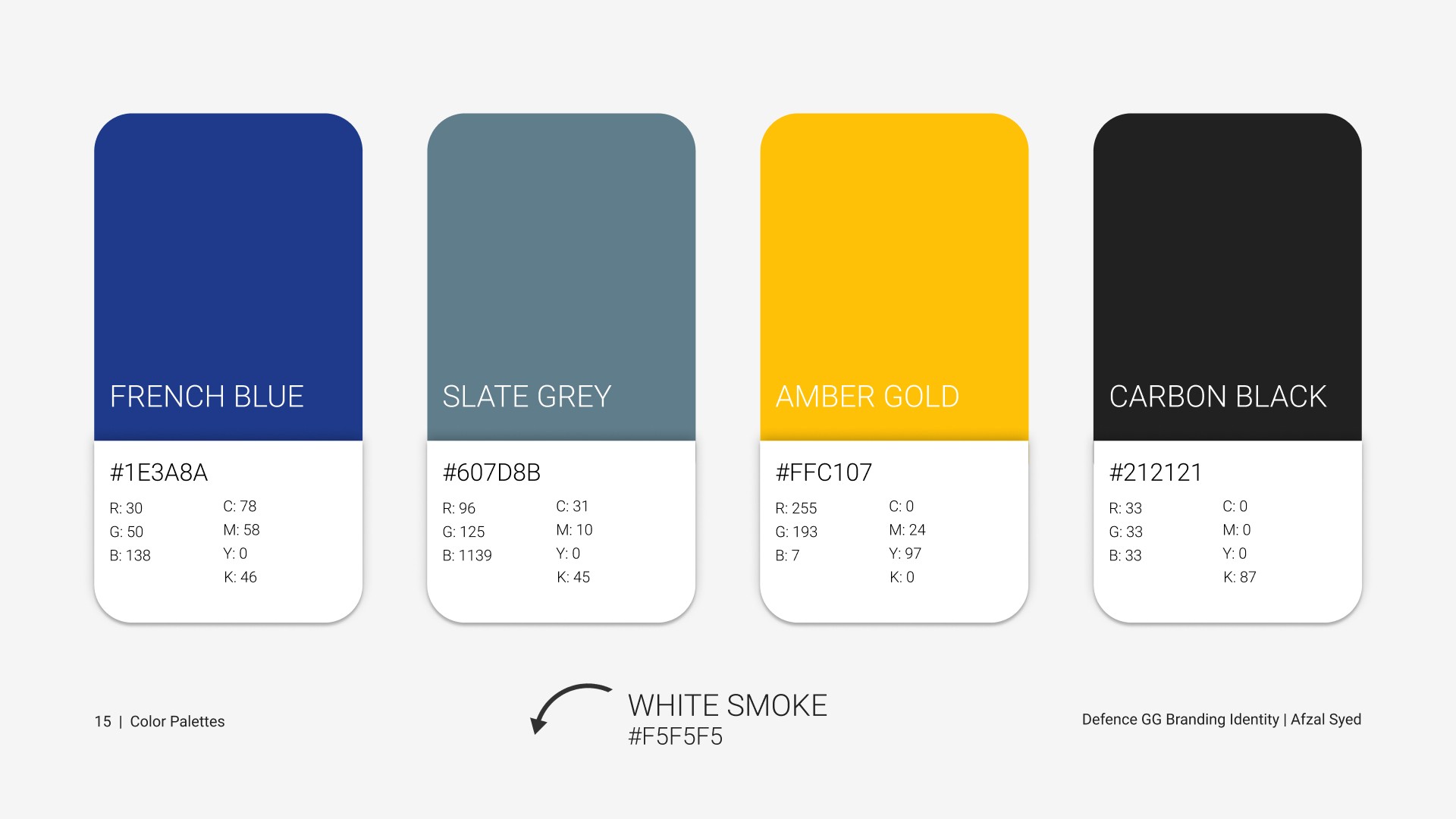
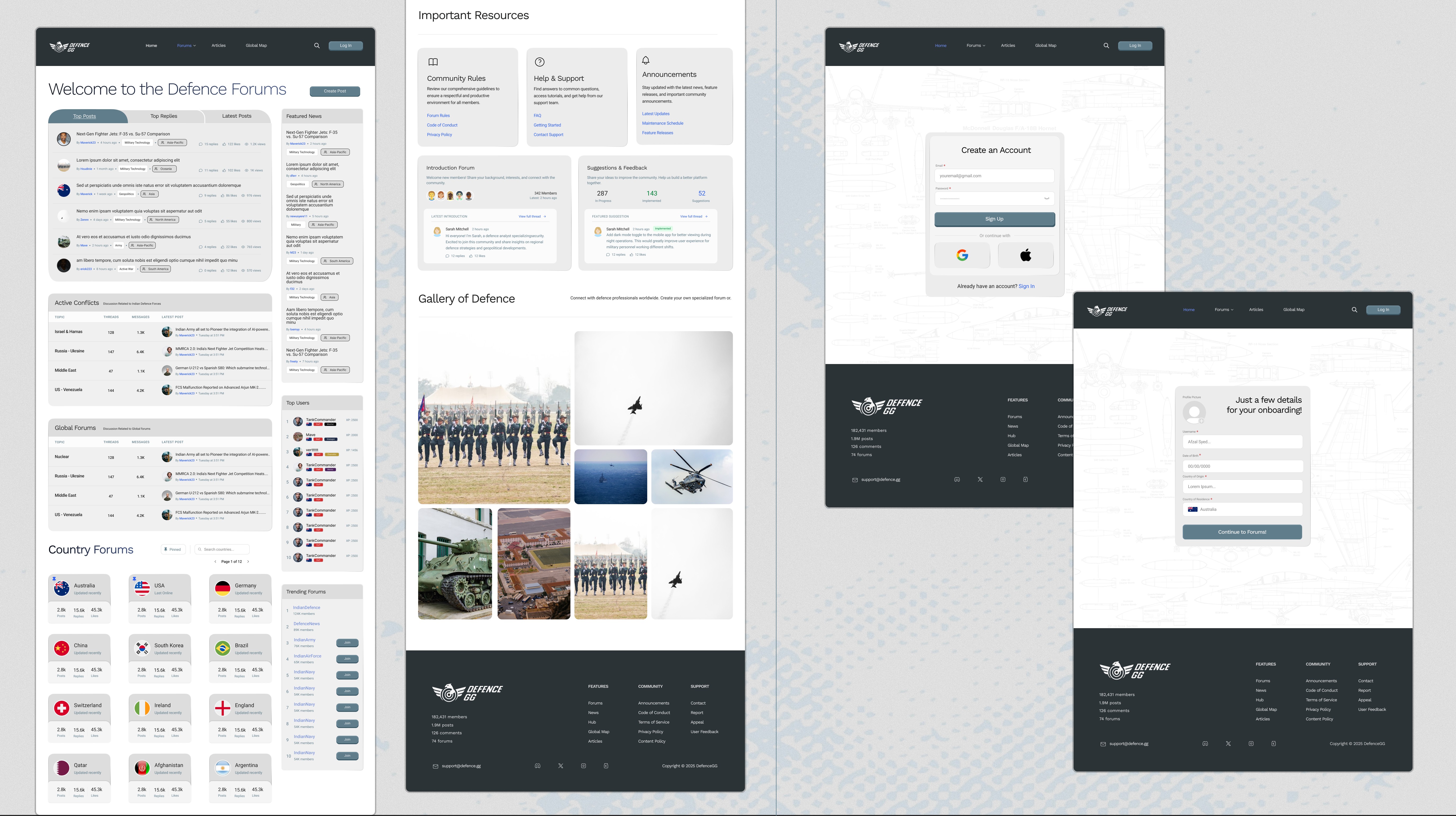
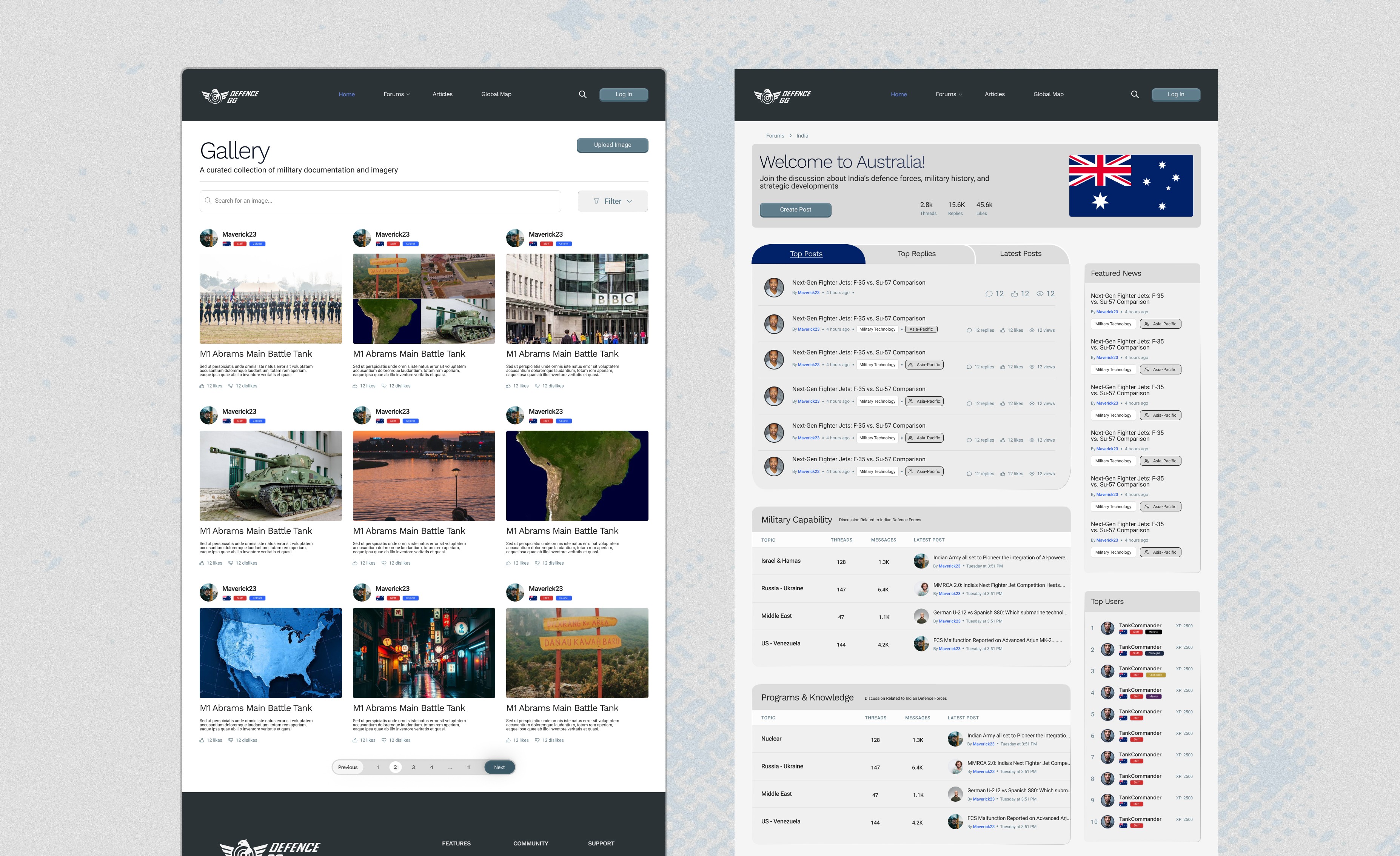
Flow 1 required that most pages a guest visits work without an account. The Category section provides search, filters, breadcrumbs, and a clear thread list for easy browsing of latest content.
Design Decisions
The guest experience came first
The guest loop had to work before anything else. The flows were defined before a single screen was designed, and that order shaped the entire product.
Flow 1 required that most pages a guest visits work without an account. The Category section provides search, filters, breadcrumbs, and a clear thread list for easy browsing of latest content.
Design Decisions
The guest experience came first
The guest loop had to work before anything else. The flows were defined before a single screen was designed, and that order shaped the entire product.
Flow 1 required that most pages a guest visits work without an account. The Category section provides search, filters, breadcrumbs, and a clear thread list for easy browsing of latest content.
Thread creation reflects real workflows
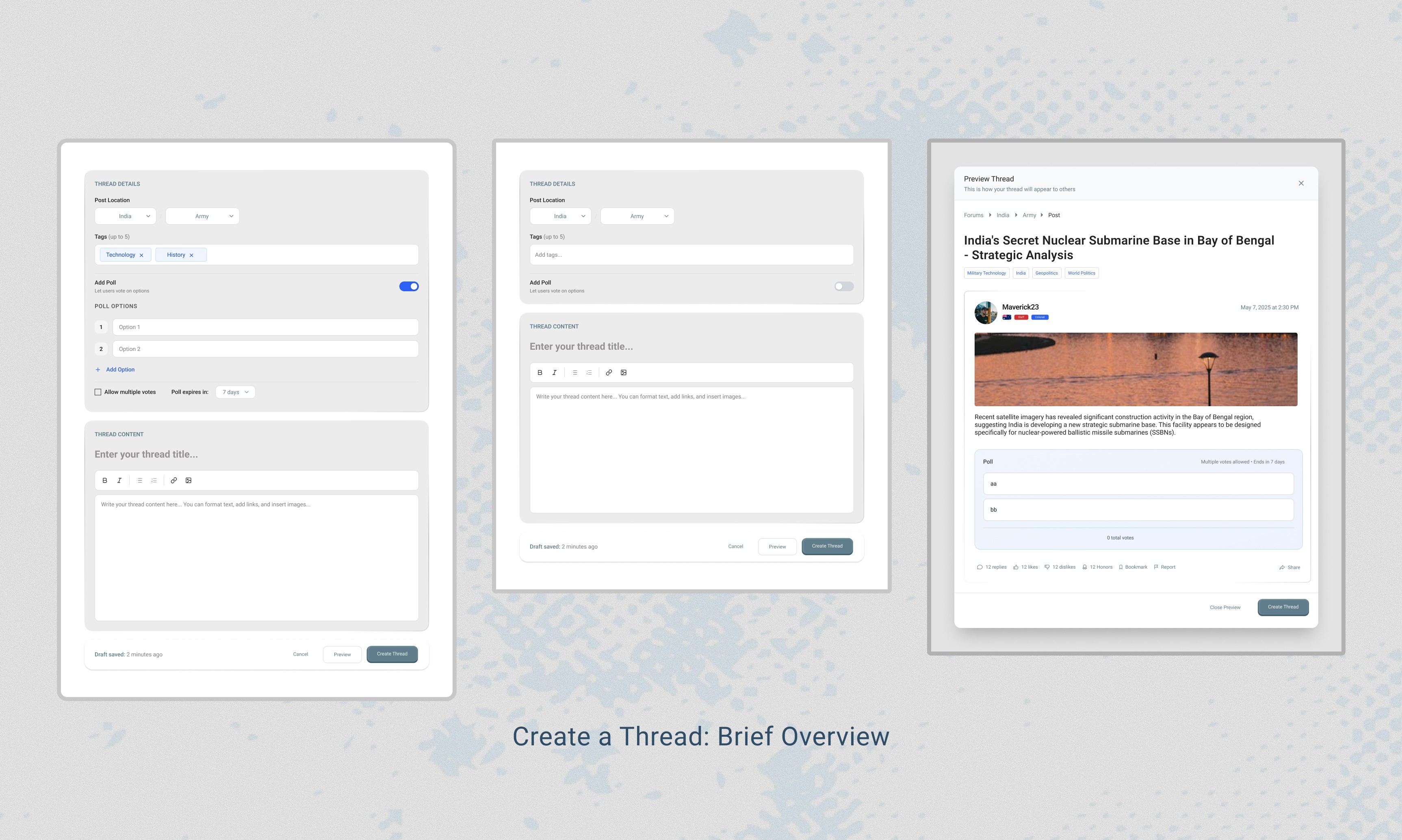
The thread creation page supports how people actually write. Users can choose a post type such as Discussion, Q&A, or Poll, add categories and tags, write in a full editor, attach files, control visibility, and rely on auto-saved drafts. Auto-save is the most important detail. If a user leaves midway and returns later, their work is still there.
Articles expand the platform
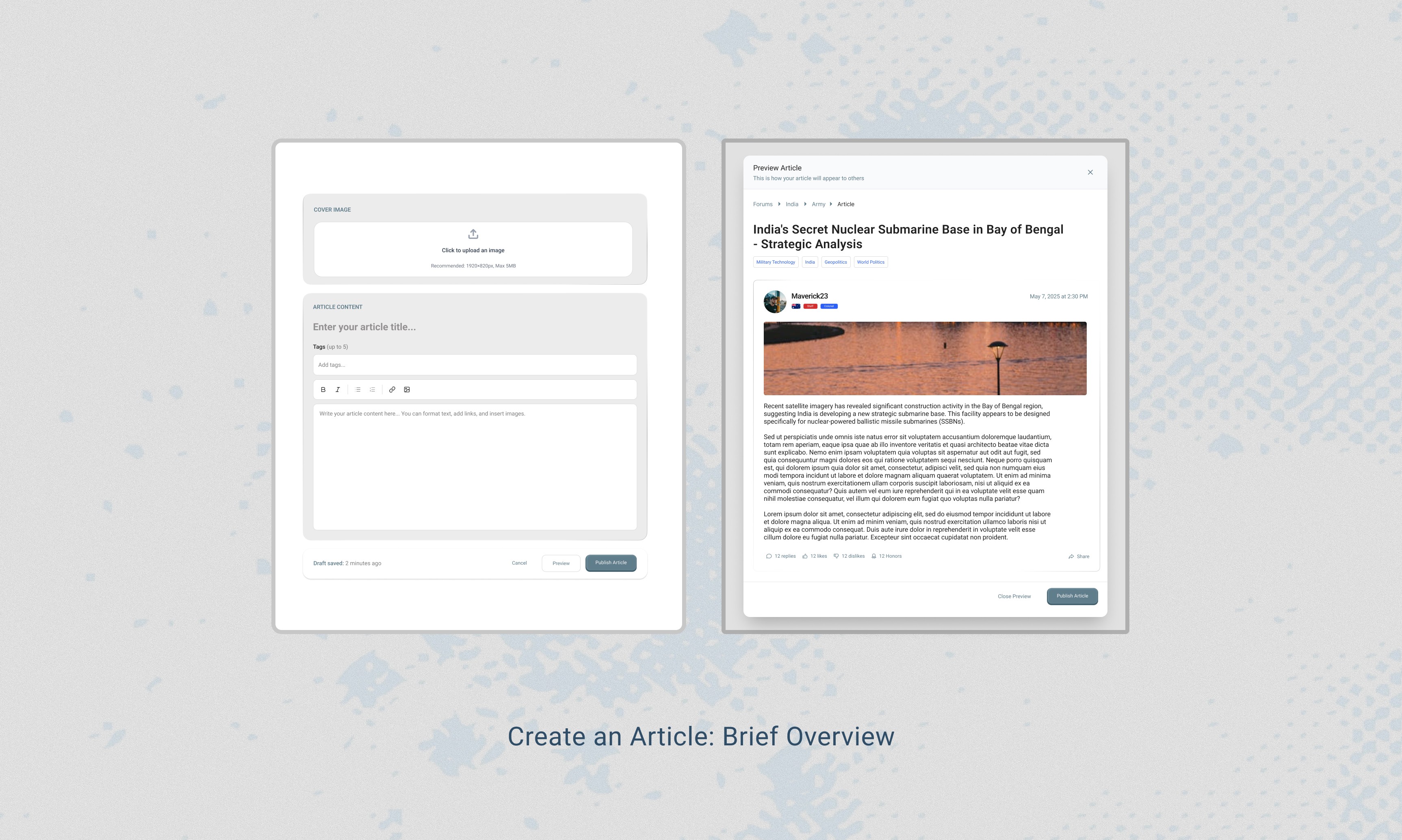
Articles support deeper analysis. Creating a dedicated article flow with previews, structured content, and a hero image allows both formats to exist side by side. Users can start a quick thread to spark conversation or publish a long-form article to present a complete argument. This gives the platform the qualities of both a community and a publication.
Thread creation reflects real workflows
The thread creation page supports how people actually write. Users can choose a post type such as Discussion, Q&A, or Poll, add categories and tags, write in a full editor, attach files, control visibility, and rely on auto-saved drafts. Auto-save is the most important detail. If a user leaves midway and returns later, their work is still there.
Articles expand the platform
Articles support deeper analysis. Creating a dedicated article flow with previews, structured content, and a hero image allows both formats to exist side by side. Users can start a quick thread to spark conversation or publish a long-form article to present a complete argument. This gives the platform the qualities of both a community and a publication.
Thread creation reflects real workflows
The thread creation page supports how people actually write. Users can choose a post type such as Discussion, Q&A, or Poll, add categories and tags, write in a full editor, attach files, control visibility, and rely on auto-saved drafts. Auto-save is the most important detail. If a user leaves midway and returns later, their work is still there.
Articles expand the platform
Articles support deeper analysis. Creating a dedicated article flow with previews, structured content, and a hero image allows both formats to exist side by side. Users can start a quick thread to spark conversation or publish a long-form article to present a complete argument. This gives the platform the qualities of both a community and a publication.
Impact
Impact
Impact
Early beta feedback highlights visual credibility as the strongest difference. Users familiar with other defence forums say DefenceGG feels more serious and more thoughtfully designed. The guest browsing path has also helped reduce early drop-off. Visitors can explore conversations freely before deciding whether they want to sign up.
Early beta feedback highlights visual credibility as the strongest difference. Users familiar with other defence forums say DefenceGG feels more serious and more thoughtfully designed. The guest browsing path has also helped reduce early drop-off. Visitors can explore conversations freely before deciding whether they want to sign up.
Early beta feedback highlights visual credibility as the strongest difference. Users familiar with other defence forums say DefenceGG feels more serious and more thoughtfully designed. The guest browsing path has also helped reduce early drop-off. Visitors can explore conversations freely before deciding whether they want to sign up.
Other Projects:
Other Projects:

If you'd like to discuss a potential collaboration, reach out to me.
If you'd like to discuss a potential collaboration, reach out to me.
If you'd like to discuss a potential collaboration, reach out to me.